Veterinary Blood Analyzer
ProductOverview
The veterinary blood analyzer provides point-of-care laboratory testing in the clinic or hospital, enabling rapid diagnosis of anemia, infection, organ dysfunction, and metabolic abnormalities. Unlike reference laboratory testing (requiring sample shipment, 24–48 hour turnaround), the Veterinary Blood Analyzer delivers results in 3–5 minutes, allowing same-day clinical decision-making and treatment adjustment.
The analyzer integrates Optical Measurement System colorimetric measurement for hematology and hemoglobin-based analytes, Electrochemical Sensor Array ion-selective electrode (ISE) sensing for electrolytes, and automated Fluid Dispensing System fluid handling. A microprocessor Main Processor controls the workflow, performs calculations, and archives results in internal memory.
Sample Processing and Rotor System
Blood samples are collected into capillary tubes or EDTA (ethylenediaminetetraacetic acid) collection vials to prevent clotting. A small volume (10–50 µL) is manually or automatically loaded into the Sample Rotor System rotating sample disc. The rotor has 20–40 indexed sample positions. A Rotor Motor stepper motor (24 VDC, NEMA 17) indexes the rotor, moving one sample at a time into the optical measurement chamber.
A Position Sensor optical limit switch detects the rotor home position (index mark), ensuring accurate sample alignment with the light path. Once a sample is indexed, it remains stationary during measurement (no motion artifact).
Hematology Measurement via Optical Sensing
The Optical Measurement System optical module measures red blood cell (RBC) count, white blood cell (WBC) count, hemoglobin concentration, and mean corpuscular hemoglobin concentration (MCHC) via light absorbance.
A LED Light Source dual-wavelength LED (540 nm and 600 nm) illuminates the blood sample. At 540 nm, hemoglobin shows strong absorbance; at 600 nm, absorbance is low. By comparing absorbance at both wavelengths, the analyzer calculates hemoglobin concentration (Beer-Lambert law: absorbance ∝ concentration × pathlength). A typical normal dog hemoglobin is 12–18 g/dL; anemia is indicated by hemoglobin <10 g/dL.
Light passes through the sample in a precision Optical Cuvette Holder optical chamber (typically 0.5–1 mm pathlength). Light is transmitted via Optical Fiber fiber optic coupling to Photodiode Detector silicon photodiode detectors (one per wavelength).
The Optical Lens collimating optics ensures a parallel, focused beam within the chamber, minimizing optical aberrations that degrade accuracy.
RBC and WBC counts are derived from sample impedance or optical light scatter (if the analyzer uses 3-angle scatter detection): a laser or LED illuminates cells, and forward scatter intensity (proportional to cell number) is measured by photodetectors at different angles. Modern benchtop analyzers often use proprietary algorithms combining optical and impedance measurements, correlating results to reference laboratory standards.
Serum Chemistry via Ion-Selective Electrodes
The Electrochemical Sensor Array array measures sodium (Na), potassium (K), chloride (Cl), and pH using Sodium ISE, Potassium ISE, Chloride ISE, and pH Electrode ion-selective electrodes. ISE sensors are voltage-generating devices: the potential (mV) at the electrode is proportional to the logarithm of ion concentration (Nernst equation: E = E₀ + (RT/nF) ln[ion]).
Each ISE consists of an ion-selective membrane (containing ionophores that preferentially bind target ions) in contact with an inner filling solution. When serum with different sodium concentration is applied, sodium ions diffuse across the membrane, establishing an electrical potential difference across the membrane. This potential is measured by a Reference Electrode Ag/AgCl reference electrode (fixed potential, +200 mV).
A ISE Amplifier high-impedance amplifier (input impedance >10¹⁴ Ω) measures the electrode voltage with minimal current draw (preventing electrode polarization and drift). A typical sodium electrode produces ~61 mV per decade of concentration change (Nernstian slope). By measuring voltage at known calibration concentrations (low and high), the analyzer calculates the unknown serum sodium: [Na] = (measured mV − intercept) / slope.
pH is measured similarly via the pH Electrode glass electrode, which produces ~60 mV per pH unit. Other analytes (glucose, creatinine, BUN, chloride, calcium, phosphorus) are measured via colorimetry: reagents are added to serum, and the resulting colored complex is quantified at specific optical wavelengths using the same Optical Measurement System optical module as hematology.
Automated Reagent and Sample Handling
The Fluid Dispensing System peristaltic pump (0.5–10 µL/sec adjustable) and Solenoid Valve solenoid valves automate fluid transfer. Sample is aspirated from the capillary, dispensed into a reaction chamber, mixed with reagents, and incubated.
The Reagent Cartridge disposable cartridge contains multiple reagent chambers (typically 10–15 separate compartments, each with a specific reagent or calibration solution). The cartridge is inserted into the analyzer at the start of a shift; the analyzer automatically indexes the cartridge to the correct reagent for each test.
A Temperature Regulation system maintains the reaction chamber at 37 °C (body temperature), essential for enzyme-based assays: enzyme-catalyzed reactions have rate constants that double every 10 °C rise (Q₁₀ ~2). A Heating Element resistive heater and Temperature Sensor thermistor with PID Temperature Controller PID feedback maintain ±0.5 °C stability.
Quality Control and Result Validation
Before releasing patient results, the analyzer runs quality control (QC) checks:
Calibration Verification: At startup, the analyzer measures calibration controls (low, normal, high concentration standards) to establish a calibration curve. The measured values are compared to target ranges; if calibration is out of limits, the analyzer flags the error and prevents patient testing until recalibration succeeds.
Linearity Check: The analyzer may measure samples at multiple dilutions to ensure the optical signal is linear across the concentration range. Non-linearity suggests optical path obstruction or reagent degradation.
Reagent Integrity: Reagent cartridges have lot numbers and expiration dates. The analyzer checks the cartridge ID via barcode or RFID, confirming it matches the installed cartridge and hasn't expired.
Internal Controls: Some analyzers run built-in internal controls (cells or solutions injected from internal reservoirs) at specified intervals, allowing ongoing validation of optical and electrochemical modules.
If any QC check fails, the analyzer alerts the operator and prevents patient result release, ensuring clinical reliability. This multi-checkpoint approach reduces erroneous results that could lead to inappropriate treatment.
Data Management and Display
Results are displayed on a User Interface and Display 7–10" color touchscreen showing individual values, normal ranges, and flags for abnormal results. The operator can review data, compare to previous results (trend analysis), and print results via a Thermal Printer thermal printer.
A Data Storage internal flash memory (32 GB) stores 10,000+ results with timestamps and patient identifiers. The analyzer can export data via USB Interface USB to a computer for integration with electronic medical records (EMR) or laboratory information systems (LIS).
Clinical Applications
Emergency Triage: A collapsed dog is brought to the emergency room. A quick blood analyzer test reveals severe hypokalemia (K = 2.1 mEq/L, normal 3.5–5.0), suggesting cardiac dysrhythmia risk. The veterinarian immediately starts IV potassium supplementation, preventing cardiac arrest.
Suspected Infection: A cat with fever has a CBC run; results show WBC = 22,000/µL (normal 5,000–19,000), indicating bacterial infection. Empirical broad-spectrum antibiotics are started before culture results return (which take 24–48 hours).
Renal Disease Monitoring: A geriatric dog on kidney supportive care has routine blood work monthly. The analyzer shows creatinine = 2.8 mg/dL (normal <1.4), indicating declining renal function. The veterinarian adjusts medications and IV fluid rates based on trends.
Hypoglycemia Detection: A toy breed puppy is presented with seizures. A quick glucose measurement shows 35 mg/dL (critical hypoglycemia, normal 80–120). IV dextrose is administered immediately, preventing permanent neurological damage.
Maintenance and Reagent Management
Daily: The analyzer performs self-checks on power-up (optical sensor responsiveness, electrode potential stability). The user visually inspects tubing and cuvette holder for clogs or debris.
Weekly: Calibration verification runs are performed using provided control materials. Reagent cartridge status is checked (expiration date, lot number).
Monthly: Optical path cleaning may be required (some analyzers have automated cleaning cycles; others require manual swabbing with lint-free wipes and appropriate solvent).
Quarterly: Electrode response is tested against electrode maintenance standards; aged or sluggish electrodes are replaced (cost ~$50–100 per electrode).
Annually: Factory service includes full optical and electronic calibration, pressure sensor inspection (fluid pathways), and software firmware update.
Reagent cartridges typically last 20–40 samples before being replaced (cost $100–200 per cartridge). Proper storage (cool, dry environment, protected from light) extends cartridge shelf life to 6–12 months.
The veterinary blood analyzer is transformative for small-animal emergency and general practice: it reduces diagnostic latency from days to minutes, enabling rapid clinical decision-making and improving outcomes in acute disease. Larger practices run 50–100 samples per day; lower-volume practices benefit from the rapid turnaround for problem-solving cases.
Veterinary Blood Analyzer parts and their functions
8 top-level parts · 47 parts in total · full bill of materials below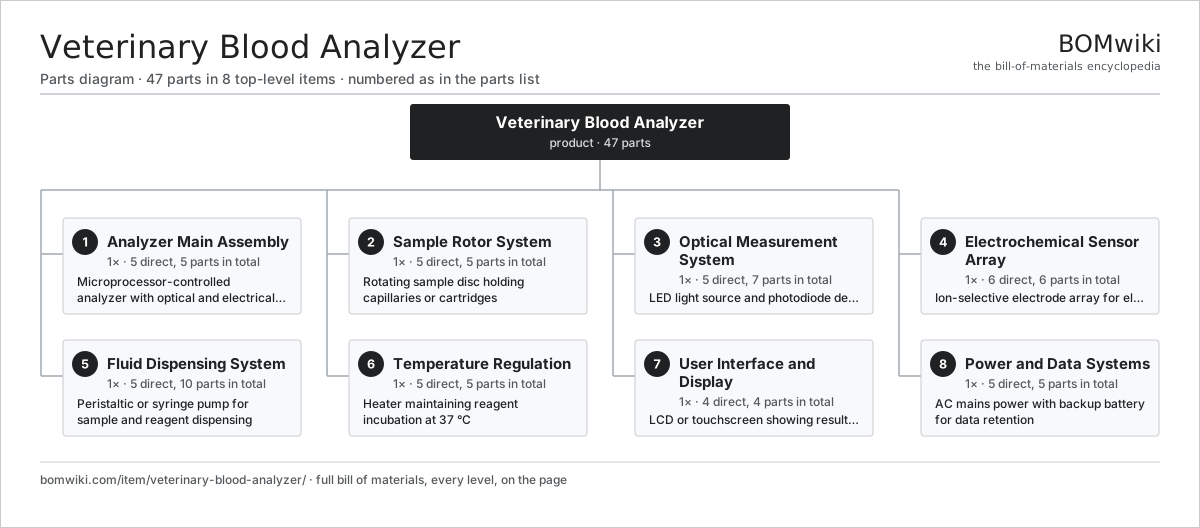
| # | Part | Qty | What it does |
|---|---|---|---|
| 1 | Analyzer Main Assembly 5 parts | 1× | Microprocessor-controlled analyzer with optical and electrical sensors |
| 2 | Sample Rotor System 5 parts | 1× | Rotating sample disc holding capillaries or cartridges |
| 3 | Optical Measurement System 5 parts | 1× | LED light source and photodiode detector for color measurement |
| 4 | Electrochemical Sensor Array 6 parts | 1× | Ion-selective electrode array for electrolyte measurement |
| 5 | Fluid Dispensing System 5 parts | 1× | Peristaltic or syringe pump for sample and reagent dispensing |
| 6 | Temperature Regulation 5 parts | 1× | Heater maintaining reagent incubation at 37 °C |
| 7 | User Interface and Display 4 parts | 1× | LCD or touchscreen showing results and quality control |
| 8 | Power and Data Systems 5 parts | 1× | AC mains power with backup battery for data retention |
3D model
No 3D model yet. Have a CAD file of this? Add a 3D model. STL renders right on this page; STEP, FreeCAD, and OpenSCAD sources are welcome too (openly licensed, like all 3D models on BOMwiki).
Build & assembly graph
expand / collapse · shared sub-assemblies converge · links to related products · est. labourTap an assembly to expand/collapse · tap a part to open it · use “Open page” for any node · drag to pan, scroll to zoom.
Bill of materials for Veterinary Blood Analyzer
8 top-level lines · 48 rows shown · 47 parts total · indented to 3 levels| # | Item / sub-assembly | Part no. | Qty/assy | Ext. qty | Parts | Type |
|---|---|---|---|---|---|---|
| 1 | Analyzer Main Assembly 5 parts | veterinary-blood-analyzer-main-unit | 1× | 1 | 5 | assembly |
| 1.1 | Analyzer Enclosure | veterinary-blood-analyzer-chassis | 1× | 1 | · | part |
| 1.2 | Main Processor | veterinary-blood-analyzer-processor | 1× | 1 | · | part |
| 1.3 | Main PCB | veterinary-blood-analyzer-pcb-main | 1× | 1 | · | part |
| 1.4 | Power PCB | veterinary-blood-analyzer-pcb-power | 1× | 1 | · | part |
| 1.5 | Fastener Set | fastener-set | 1× | 1 | · | part |
| 2 | Sample Rotor System 5 parts | veterinary-blood-analyzer-rotor | 1× | 1 | 5 | assembly |
| 2.1 | Sample Rotor | veterinary-blood-analyzer-rotor-disc | 1× | 1 | · | part |
| 2.2 | Rotor Motor | veterinary-blood-analyzer-rotor-motor | 1× | 1 | · | part |
| 2.3 | Position Sensor | veterinary-blood-analyzer-sample-position-sensor | 1× | 1 | · | part |
| 2.4 | Optical Cuvette Holder | veterinary-blood-analyzer-cuvette-holder | 1× | 1 | · | part |
| 2.5 | Waste Drain Tube | veterinary-blood-analyzer-waste-tube | 1× | 1 | · | part |
| 3 | Optical Measurement System 5 parts | veterinary-blood-analyzer-optics | 1× | 1 | 7 | assembly |
| 3.1 | LED Light Source | veterinary-blood-analyzer-led-light | 1× | 1 | · | part |
| 3.2 | Bandpass Filter | veterinary-blood-analyzer-optical-filter | 2× | 2 | · | part |
| 3.3 | Photodiode Detector | veterinary-blood-analyzer-photodiode | 2× | 2 | · | part |
| 3.4 | Optical Fiber | veterinary-blood-analyzer-optical-fiber | 1× | 1 | · | part |
| 3.5 | Optical Lens | veterinary-blood-analyzer-lens-assembly | 1× | 1 | · | part |
| 4 | Electrochemical Sensor Array 6 parts | veterinary-blood-analyzer-electrodes | 1× | 1 | 6 | assembly |
| 4.1 | Sodium ISE | veterinary-blood-analyzer-na-electrode | 1× | 1 | · | part |
| 4.2 | Potassium ISE | veterinary-blood-analyzer-k-electrode | 1× | 1 | · | part |
| 4.3 | Chloride ISE | veterinary-blood-analyzer-cl-electrode | 1× | 1 | · | part |
| 4.4 | pH Electrode | veterinary-blood-analyzer-ph-electrode | 1× | 1 | · | part |
| 4.5 | Reference Electrode | veterinary-blood-analyzer-reference-electrode | 1× | 1 | · | part |
| 4.6 | ISE Amplifier | veterinary-blood-analyzer-electrode-amplifier | 1× | 1 | · | part |
| 5 | Fluid Dispensing System 5 parts | veterinary-blood-analyzer-pump | 1× | 1 | 10 | assembly |
| 5.1 | Peristaltic Pump | veterinary-blood-analyzer-pump-peristaltic | 1× | 1 | · | part |
| 5.2 | Pump Motor | veterinary-blood-analyzer-pump-stepper | 1× | 1 | · | part |
| 5.3 | Sample Tubing | veterinary-blood-analyzer-tubing | 4× | 4 | · | part |
| 5.4 | Solenoid Valve | veterinary-blood-analyzer-valve-solenoid | 3× | 3 | · | part |
| 5.5 | Reagent Cartridge | veterinary-blood-analyzer-reagent-cartridge | 1× | 1 | · | part |
| 6 | Temperature Regulation 5 parts | veterinary-blood-analyzer-temperature-control | 1× | 1 | 5 | assembly |
| 6.1 | Heating Element | heating-element | 1× | 1 | · | part |
| 6.2 | Temperature Sensor | veterinary-blood-analyzer-temperature-sensor | 1× | 1 | · | part |
| 6.3 | Relay | relay | 1× | 1 | · | part |
| 6.4 | PID Temperature Controller | veterinary-blood-analyzer-pid-controller | 1× | 1 | · | part |
| 6.5 | Thermal Insulation | veterinary-blood-analyzer-insulation | 1× | 1 | · | part |
| 7 | User Interface and Display 4 parts | veterinary-blood-analyzer-display | 1× | 1 | 4 | assembly |
| 7.1 | Touchscreen Display | veterinary-blood-analyzer-lcd-screen | 1× | 1 | · | part |
| 7.2 | Control Interface | veterinary-blood-analyzer-keyboard | 1× | 1 | · | part |
| 7.3 | Thermal Printer | veterinary-blood-analyzer-printer | 1× | 1 | · | part |
| 7.4 | Bare PCB | pcb-bare | 1× | 1 | · | part |
| 8 | Power and Data Systems 5 parts | veterinary-blood-analyzer-power-supply | 1× | 1 | 5 | assembly |
| 8.1 | Power Supply | power-supply | 1× | 1 | · | part |
| 8.2 | Backup Battery | veterinary-blood-analyzer-battery | 1× | 1 | · | part |
| 8.3 | Data Storage | veterinary-blood-analyzer-storage-device | 1× | 1 | · | part |
| 8.4 | USB Interface | veterinary-blood-analyzer-usb-port | 1× | 1 | · | part |
| 8.5 | Power Cord | veterinary-blood-analyzer-power-cord | 1× | 1 | · | part |
Something wrong in this list? Report a problem with this BOM.
Related products
same domain, ranked by shared parts Intraoral Scanner
240 parts · shares 1 with this page
Intraoral Scanner
240 parts · shares 1 with this page
 Large Animal Anesthesia Machine
75 parts · shares 1 with this page
Large Animal Anesthesia Machine
75 parts · shares 1 with this page
Sourcing: possible vendors
Browse the supplier directory → Prices, MOQ, and lead times are algorithmic estimates, not quotes, and not claims about these companies. Company mappings are curated by keyword; est. price band $200–$200k. How estimates work| Vendor | HQ | Specialty | MOQ | Lead time |
|---|---|---|---|---|
| dentsplysirona.com ↗ | Charlotte, US | Dental equipment | 100 units | 10–16 wks |
|
🇺🇸Envista
envistaco.com ↗
|
Brea, US | Dental (KaVo, Nobel) | 100 units | 10–16 wks |
|
🇫🇮Planmeca
planmeca.com ↗
|
Helsinki, FI | Dental units & imaging | 100 units | 10–16 wks |
|
🇺🇸A-dec
a-dec.com ↗
|
Newberg, US | Dental chairs & delivery | 100 units | 10–16 wks |
|
🇺🇸Midmark
midmark.com ↗
|
Versailles, US | Medical & veterinary equipment | 100 units | 10–16 wks |
1,491-word article