Hot Towel Cabinet
ProductOverview
Hot towel cabinets are insulated electric heated chambers designed to warm and store towels, similar to equipment found in spas and luxury hotels. The system combines a double-wall insulated enclosure with electric resistance heating elements, thermostatic control, and optional UV sterilization to maintain towels at comfortable temperature (120–160 °F / 50–70 °C) while reducing bacterial and fungal contamination.
Unlike simple towel warmers that are open-frame heating racks, cabinets feature doors and insulation to minimize heat loss and allow towel storage without occupying counter space. Low-speed circulation fans distribute heat uniformly, preventing hot spots and cold zones. Optional UV Module units provide germicidal sterilization using 254 nm UV-C radiation during idle periods.
Heating element technology
The Heating Element consists of a Heating Coil made from nichrome 80 wire or stainless steel sheath elements rated 1000–2000 W at 120 V or 240 V AC. Nichrome wire is preferred because:
- High electrical resistivity: 0.1 ohm/cm, producing significant heat at modest current.
- Oxidation resistance: surface oxide (Cr2O3) protects the wire, extending lifespan to 5000+ hours.
- Temperature tolerance: nichrome can operate to 1100 °C before failure, providing margin for overheat situations.
The element is mounted on ceramic or mica Element Support insulators to isolate it from the stainless steel cabinet walls, preventing electrical shock hazards and reducing conduction losses.
A Overheat Thermostat safety cutout (bi-metallic, 90 °C setpoint) breaks the heating circuit if cabinet temperature exceeds safe limits. This prevents fabric degradation and eliminates fire risk from uncontrolled overheating.
Thermal insulation and enclosure design
The Cabinet Enclosure is a double-wall construction: an outer stainless steel or powder-coated steel shell, a polyurethane foam core (R-7 to R-10, typically 2"–3" thick), and an inner stainless steel lining. The Foam Insulation minimizes thermal losses to the environment.
Stainless steel is preferred because:
- Corrosion resistance in humid bathroom environments (high moisture from shower steam).
- Ease of cleaning; stainless surfaces resist staining and bacterial biofilm formation.
- Thermal conductivity (15 W/m·K) is manageable; aluminum (160 W/m·K) would require thicker insulation to achieve the same R-value.
The Door Assembly is critical for energy efficiency. A Door Gasket (silicone or EPDM, 1/2" width) compresses against the frame when the door closes, creating an airtight seal. The gasket must tolerate sustained 70 °C temperature without degradation; natural rubber fails at <80 °C, so premium cabinets use heat-resistant silicone (rated to 150 °C+).
Door material is typically tempered glass for visibility or perforated metal mesh for lightweight designs. Glass provides hygiene benefits (no lint traps) but conducts heat; a 5 mm glass pane at 70 °C interior and 20 °C room temperature loses ~100 W per square meter of glass area (negligible if door area is <0.5 m²).
Air circulation and heat distribution
Without circulation, the Heating Coil creates a hot zone directly below the element, while upper shelves remain cool. A Circulation Fan (typically a 5–15 W low-speed EC motor) draws air across the heating element and distributes it evenly through the cabinet. The fan operates continuously or cycles with the heating element thermostat.
The fan draws air downward from upper shelves, passes it over the heating element, and recirculates it back into the cabinet via perforations in Shelf units. Perforated shelving (1.5 mm stainless steel with 6–8 mm diameter holes spaced 30 mm apart) allows air to flow while supporting towel weight.
A Fan Filter (washable nylon mesh, 100 micron) traps lint and dust, preventing element fouling. This filter must be cleaned monthly to maintain airflow and heating efficiency.
Thermostat control strategy
The Control System uses either:
Bi-metallic thermostat (mechanical): Simple; senses temperature directly at the heating element via a metal rod that expands/contracts with heat, toggling a mechanical switch. Accuracy ±5 °C; no electronics required.
Electronic thermostat (microcontroller-based): A Thermostat Sensor (NTC thermistor or digital probe) sends temperature feedback to a microcontroller, which activates the heating Relay via PID control. Accuracy ±1–2 °C; allows digital display and setpoint memory.
Setpoint adjustment is typically via a rotary dial or button pad, ranging 40–70 °C. The Control PCB implements dead-band logic: if setpoint is 60 °C and actual is 62 °C, the heater is off; it reactivates when temperature drops to 58 °C. This prevents rapid on-off cycling that would stress the relay and heating element.
UV sterilization module (optional)
Pathogenic bacteria (Staphylococcus, Escherichia) and fungi (Candida, dermatophytes) survive on damp towel fibers. The UV Module uses UV-C radiation (254 nm wavelength) to disrupt bacterial and fungal DNA, rendering them non-viable.
The module consists of:
- UV lamp: An 8–20 W tube lamp (typically 10 W standard) producing 254 nm UVC. Lifespan is <1000 hours; lamps must be replaced annually.
- Ballast: An electronic high-frequency ballast (typically 20–40 kHz) ignites the lamp and regulates current to protect from overheat.
- Timer or motion sensor: Activates UV for 30–60 minute cycles during idle periods (e.g., overnight), preventing continuous lamp operation and extending lamp life.
Germicidal efficacy depends on exposure time and UV intensity:
- A 10 W lamp at 15 cm distance delivers ~100 µW/cm² at the towel surface.
- Exposure to 99% bacterial kill requires 1000 µJ/cm², equivalent to 10 seconds at 100 µW/cm² (for direct surface exposure).
- Towel interior fibers receive lower dose due to light scattering; 30–60 minute cycles ensure penetration.
Important: UV-C lamps emit ozone and must be vented to atmosphere or filtered through activated carbon. Ozone exposure >0.1 ppm causes respiratory irritation; most cabinets include exhaust ducting or ozone scrubbers.
Installation and electrical requirements
Hot towel cabinets are typically hardwired to a dedicated 240 V, 20 A or 120 V, 20 A circuit (depending on power rating). A 1500 W cabinet (peak heating) draws 6.25 A at 240 V or 12.5 A at 120 V. Continuous operation (worst case) requires accordingly-sized wiring and circuit breaker.
Most cabinet designs include a power switch and thermal fuse in the mains circuit. Installation in bathrooms requires GFCI (ground-fault circuit interrupter) protection per electrical code to prevent shock hazard from moisture.
Venting is critical if UV module is present: exhaust ducting (typically 2"–3" flexible or rigid tube) must route ozone and water vapor outdoors. Ducting is often integrated into the cabinet's exhaust port or designed to fit standard ductwork used in bathroom exhaust fans.
Placement should be on a level, stable surface away from direct water spray (though stainless steel is water-resistant, standing water accelerates galvanic corrosion). Wall mounting is possible if structural support exists; wall anchors must support 100+ lbs depending on cabinet size.
Maintenance and lifespan
Daily: None required.
Monthly: Clean the Fan Filter with a vacuum or soft brush to remove lint. Check door gasket for visible cracks or areas of compression loss; if gasket is permanently creased, heat loss increases and the gasket should be replaced.
Annually:
- Test thermostat accuracy by placing a calibrated thermometer inside the cabinet and comparing readout to control dial.
- If UV module is present, replace the UV lamp (typically indicated by a time-tracking label on the ballast).
- Inspect the heating coil for corrosion (white or green deposits indicating rust); if corrosion is visible, the element may need replacement.
- Flush any mineral deposits from steam holes if the cabinet serves as a clothes steamer in damp climates.
Lifespan: Heating elements typically last 8–10 years before resistance increases, requiring higher current and eventually thermal fuse tripping. Thermostats last 15+ years. Stainless steel enclosures last 20+ years if not exposed to corrosive chemical cleaners (use mild soap and water only).
Energy consumption and operating costs
A 1500 W cabinet running 2 hours daily consumes 3 kWh per day, or ~1100 kWh per year (assuming year-round operation). At typical US rates of $0.12/kWh, annual cost is ~$132 per year.
Most cabinets do not run continuously; thermostatic cycling reduces effective power to 30–50% of nameplate rating, bringing annual cost to $40–66 per year. In hotels and spas with heavy towel turnover, cabinets may run 16+ hours daily; those installations justify heat recovery or on-demand control (activating 30 minutes before guest check-in rather than 24/7).
Hot Towel Cabinet parts and their functions
8 top-level parts · 41 parts in total · full bill of materials below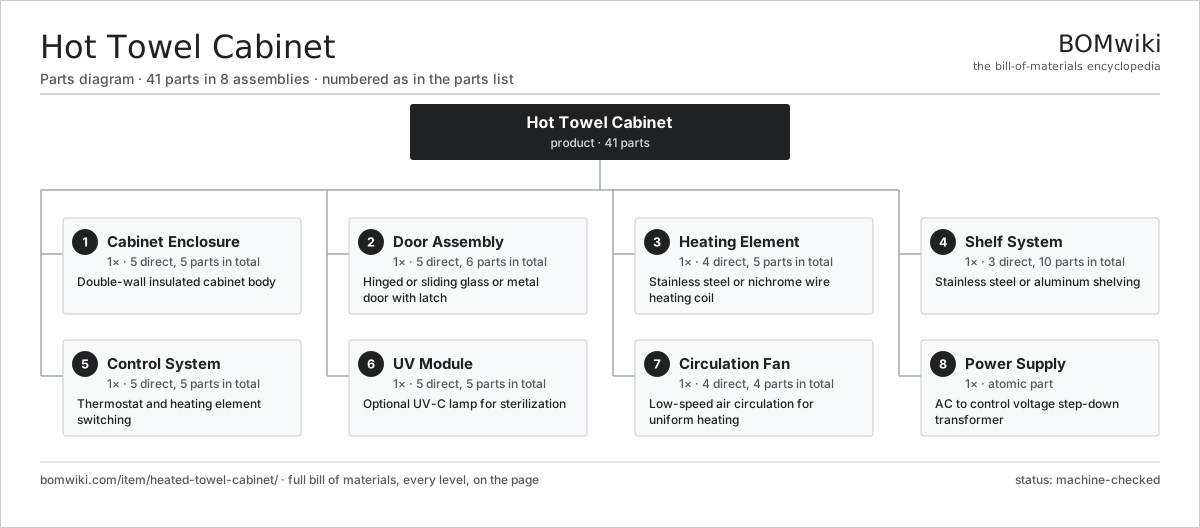
| # | Part | Qty | What it does |
|---|---|---|---|
| 1 | Cabinet Enclosure 5 parts | 1× | Double-wall insulated cabinet body |
| 2 | Door Assembly 5 parts | 1× | Hinged or sliding glass or metal door with latch |
| 3 | Heating Element 4 parts | 1× | Stainless steel or nichrome wire heating coil |
| 4 | Shelf System 3 parts | 1× | Stainless steel or aluminum shelving |
| 5 | Control System 5 parts | 1× | Thermostat and heating element switching |
| 6 | UV Module 5 parts | 1× | Optional UV-C lamp for sterilization |
| 7 | Circulation Fan 4 parts | 1× | Low-speed air circulation for uniform heating |
| 8 | Power Supply | 1× | AC to control voltage step-down transformer |
3D model
No 3D model yet. Have a CAD file of this? Add a 3D model — STL renders right on this page; STEP, FreeCAD, and OpenSCAD sources are welcome too (openly licensed, like all 3D models on BOMwiki).
Build & assembly graph
expand / collapse · shared sub-assemblies converge · links to related products · est. labourTap an assembly to expand/collapse · tap a part to open it · use “Open page” for any node · drag to pan, scroll to zoom.
Bill of materials for Hot Towel Cabinet
8 top-level lines · 39 rows shown · 41 parts total · indented to 3 levels| # | Item / sub-assembly | Part no. | Qty/assy | Ext. qty | Parts | Type |
|---|---|---|---|---|---|---|
| 1 | Cabinet Enclosure 5 parts | heated-towel-cabinet-enclosure | 1× | 1 | 5 | assembly |
| 1.1 | Outer Shell | heated-towel-cabinet-outer-shell | 1× | 1 | · | part |
| 1.2 | Inner Shell | heated-towel-cabinet-inner-shell | 1× | 1 | · | part |
| 1.3 | Foam Insulation | heated-towel-cabinet-foam-insulation | 1× | 1 | · | part |
| 1.4 | Base Frame | heated-towel-cabinet-base-frame | 1× | 1 | · | part |
| 1.5 | Fastener Set | fastener-set | 1× | 1 | · | part |
| 2 | Door Assembly 5 parts | heated-towel-cabinet-door-assembly | 1× | 1 | 6 | assembly |
| 2.1 | Door Frame | heated-towel-cabinet-door-frame | 1× | 1 | · | part |
| 2.2 | Door Pane | heated-towel-cabinet-door-pane | 1× | 1 | · | part |
| 2.3 | Door Hinge | heated-towel-cabinet-door-hinge | 2× | 2 | · | part |
| 2.4 | Door Latch | heated-towel-cabinet-door-latch | 1× | 1 | · | part |
| 2.5 | Door Gasket | heated-towel-cabinet-door-gasket | 1× | 1 | · | part |
| 3 | Heating Element 4 parts | heated-towel-cabinet-heating-element | 1× | 1 | 5 | assembly |
| 3.1 | Heating Coil | heated-towel-cabinet-heating-coil | 1× | 1 | · | part |
| 3.2 | Element Support | heated-towel-cabinet-element-support | 2× | 2 | · | part |
| 3.3 | Overheat Thermostat | heated-towel-cabinet-overheat-thermostat | 1× | 1 | · | part |
| 3.4 | Connector | connector | 1× | 1 | · | part |
| 4 | Shelf System 3 parts | heated-towel-cabinet-shelf-system | 1× | 1 | 10 | assembly |
| 4.1 | Shelf | heated-towel-cabinet-shelf | 3× | 3 | · | part |
| 4.2 | Shelf Support | heated-towel-cabinet-shelf-support | 6× | 6 | · | part |
| 4.3 | Fastener Set | fastener-set | 1× | 1 | · | part |
| 5 | Control System 5 parts | heated-towel-cabinet-control-system | 1× | 1 | 5 | assembly |
| 5.1 | Thermostat Sensor | heated-towel-cabinet-thermostat-sensor | 1× | 1 | · | part |
| 5.2 | Control PCB | heated-towel-cabinet-control-pcb | 1× | 1 | · | part |
| 5.3 | Relay | heated-towel-cabinet-relay | 1× | 1 | · | part |
| 5.4 | Temperature Dial | heated-towel-cabinet-temperature-dial | 1× | 1 | · | part |
| 5.5 | Connector | connector | 1× | 1 | · | part |
| 6 | UV Module 5 parts | heated-towel-cabinet-uv-module | 1× | 1 | 5 | assembly |
| 6.1 | UV Lamp | heated-towel-cabinet-uv-lamp | 1× | 1 | · | part |
| 6.2 | Ballast | heated-towel-cabinet-ballast | 1× | 1 | · | part |
| 6.3 | UV Socket | heated-towel-cabinet-uv-socket | 1× | 1 | · | part |
| 6.4 | UV Switch | heated-towel-cabinet-uv-switch | 1× | 1 | · | part |
| 6.5 | Connector | connector | 1× | 1 | · | part |
| 7 | Circulation Fan 4 parts | heated-towel-cabinet-circulation-fan | 1× | 1 | 4 | assembly |
| 7.1 | Blower Motor | blower-motor | 1× | 1 | · | part |
| 7.2 | Fan Shroud | heated-towel-cabinet-fan-shroud | 1× | 1 | · | part |
| 7.3 | Fan Filter | heated-towel-cabinet-fan-filter | 1× | 1 | · | part |
| 7.4 | Fastener Set | fastener-set | 1× | 1 | · | part |
| 8 | Power Supply | power-supply | 1× | 1 | · | part |
Related products
same domain, ranked by shared parts Ultrasonic Cavitation Machine
42 parts · shares 2 with this page
Ultrasonic Cavitation Machine
42 parts · shares 2 with this page
 Hooded Salon Dryer
81 parts · shares 1 with this page
Laser Hair Growth Cap
37 parts · shares 1 with this page
Hooded Salon Dryer
81 parts · shares 1 with this page
Laser Hair Growth Cap
37 parts · shares 1 with this page
Sourcing: possible vendors
Prices, MOQ, and lead times are algorithmic estimates, not quotes, and not claims about these companies. Company mappings are curated by keyword; est. price band $15–$500. How estimates work| Vendor | HQ | Specialty | MOQ | Lead time |
|---|---|---|---|---|
| philips.com ↗ | Amsterdam, NL | Grooming & care | 2,000 units | 6–10 wks |
|
🇩🇪Braun
braun.com ↗
|
Kronberg, DE | Grooming (P&G) | 2,000 units | 6–10 wks |
|
🇺🇸Conair
conair.com ↗
|
Stamford, US | Personal care appliances | 2,000 units | 6–10 wks |
|
🇬🇧Dyson
dyson.com ↗
|
Malmesbury, GB | Vacuums & hair care | 2,000 units | 6–10 wks |
| panasonic.com ↗ | Osaka, JP | Electronics & appliances | 2,000 units | 6–10 wks |
1,441-word article