Wine Preservation Dispenser
ProductOverview
Wine preservation dispensers are high-end refrigerated cabinets that combine wine storage with precision temperature control and an inert gas preservation system. The core innovation is automated gas injection: as wine is dispensed from a bottle, inert gas (argon or nitrogen) is simultaneously injected into the bottle headspace, maintaining positive pressure and displacing oxygen that would otherwise oxidize the wine.
Unlike traditional wine coolers that simply chill bottles for service, preservation dispensers extend bottle life from days to weeks or months. A single opened bottle refrigerated without gas protection oxidizes noticeably within 3–5 days. With constant inert gas injection, an opened bottle remains fresh for 3–6 weeks, allowing restaurants and wine clubs to offer "by-the-glass" service from premium bottles that would otherwise be wasted.
Inert gas system and chemistry
Oxygen is wine's primary enemy. Oxidation reactions degrade color compounds (anthocyanins, theaflavins) and aroma compounds, creating a flat, unpleasant flavor profile. The Inert Gas System prevents this by maintaining an oxygen-free headspace above the wine.
Two gases are used:
Argon (Ar, Z=18):
- Advantage: Heavier than air (39.9 g/mol vs 28.9 for air); sinks and seals the wine surface naturally.
- Advantage: Inert (completely non-reactive); certified food-safe under CFR 21.184.
- Disadvantage: More expensive (~$0.10 per liter vs $0.02 for nitrogen).
- Typical pressure: 2000–3000 psi in 2L or 5L cylinders.
Nitrogen (N2, Z=7):
- Advantage: Cheaper than argon; widely available industrial gas.
- Disadvantage: Lighter than air; requires positive pressure (backpressure pump) to maintain a seal over the wine.
- Disadvantage: Slightly reactive in high-heat storage conditions (negligible for refrigerated wine).
- Typical pressure: 3000–5000 psi in larger cylinders.
The Pressure Regulator reduces cylinder pressure from 2000–5000 psi to approximately 10–20 psi (regulated by a secondary stage), suitable for the Gas Solenoid.
Bottle positioning and gas injection
The Bottle Carousel holds 4–12 bottles in a fixed array or rotating carousel. Each bottle is approached by a Gas Needle (a 0.5–1 mm stainless steel needle inserted through the bottle mouth or cork) connected via tubing to the gas solenoid valve.
When a user selects a bottle for dispensing:
- The control system energizes the Gas Solenoid, injecting gas for 2–5 seconds before the pour.
- This builds a positive gas pressure (3–5 psi) above the wine surface.
- The Solenoid Tap for that bottle opens, allowing wine to flow downward into the cup.
- As wine exits, the Backpressure Valve maintains constant positive pressure, preventing air from entering.
- The tap closes after 1–2 minutes (typical pour duration).
The total gas injected per pour is approximately 20–50 mL (equivalent to 1–2 breaths of air), a negligible volume for a 750 mL bottle but sufficient to displace oxygen and establish an inert atmosphere.
Pour mechanism and flow control
The Tap Manifold is the critical precision component. Each Solenoid Tap is a 24 V DC solenoid valve rated for wine service, rated 0.5 GPM at 3 psi. The solenoid design includes:
- Plunger valve: A spring-return mechanism; energizing the solenoid opens the plunger, allowing wine to flow. Deactivation closes the plunger and shuts off flow.
- Pressure compensator: Maintaining constant pressure prevents splashing or dripping during the pour cycle.
- Cartridge design: Most wine-service solenoids use a replaceable cartridge (e.g., Parker or Comatrol), allowing field service without solvent flushing.
The Backpressure Valve is a pilot-operated regulator, typically set to 3–5 psi. As wine flows out of the tap, this backpressure maintains a seal, preventing air from backflowing up the wine spout. When the solenoid closes, the backpressure pushes remaining wine back into the bottle, preventing dripping.
Tannin-heavy wines (Cabernet, Barolo) contain compounds that polymerize and precipitate over time; solenoid cartridges can clog after months of exposure to oxidized or tannic wines. Most systems include accessible cartridge ports allowing cartridge swap in <5 minutes without disassembling the manifold.
Cooling system
Two cooling approaches are used:
Thermoelectric (Peltier):
- A Peltier Module (semiconductor heat pump) draws heat from the cabinet interior and rejects it externally via a heatsink.
- Advantages: Silent operation (no compressor noise); compact; electrical-only (no refrigerant handling).
- Disadvantages: Limited cooling capacity (~200 W); typically used for smaller dispensers (4–6 bottle positions); efficiency drops if ambient temperature exceeds 70 °F.
- Power consumption: 100–200 W.
Compressor (small refrigeration cycle):
- A sealed compressor and condenser unit similar to a wine cooler.
- Advantages: Higher capacity (500+ W); performance independent of ambient temperature up to ~100 °F; established technology.
- Disadvantages: Audible compressor cycling; larger footprint; requires occasional maintenance.
- Power consumption: 150–300 W continuous (thermostat cycling).
The Heat Exchanger is a cold plate or coil contacting the wine bottles or cabinet air. A Fan circulates air across the cold plate to distribute temperature uniformly. In thermoelectric designs, this fan is essential; in compressor designs, it reduces cooling uniformity variance.
Temperature and display control
The Control System maintains setpoint temperature via Temperature Sensor feedback (typically an NTC thermistor reading to ±1 °C accuracy). The control loop activates the cooling unit when temperature exceeds setpoint by 2–3 °F and deactivates when it falls below by the same margin (dead-band control minimizing thermostat hunting).
The Display Interface allows:
- Bottle selection: Touchscreen icons or Up/Down buttons selecting which bottle to dispense (1–12 positions).
- Temperature adjustment: Scrolling setpoint 45–65 °F (7–18 °C) for different wine styles.
- Pour duration: Setting dispense time (e.g., 30, 60, or 120 seconds for 1, 2, or 4 oz pours).
- Status display: Showing current temperature, gas cylinder pressure, and maintenance reminders.
Some high-end models include Wi-Fi connectivity, allowing smartphone control and remote monitoring of gas levels.
Gas cylinder management
The Gas Cylinder is a replaceable cartridge, typically 2L or 5L capacity at 2000–5000 psi. Consumption rates:
- Small unit (4 bottles, 5 pours/day): ~20–30 mL/pour × 5 = 100 mL/day, or ~750 mL/week.
- A 2L cylinder at 2000 psi contains ~2000 mL of gas; at 100 mL/day consumption, it lasts ~20 days.
Most commercial wine bars replace cylinders on a scheduled service basis (weekly or monthly) rather than monitoring depletion. Residential units use smaller cylinders and typically last 2–4 months between refills.
A pressure gauge on the Pressure Regulator shows residual cylinder pressure; falling below 500 psi indicates near-empty and signals a maintenance reminder on the display.
Wine chemical preservation window
Opened bottles preserved with inert gas remain acceptable for:
- Light whites (Riesling, Sauvignon Blanc): 2–4 weeks.
- Full-bodied whites (Chardonnay): 3–5 weeks.
- Light reds (Pinot Noir, Beaujolais): 2–3 weeks.
- Full-bodied reds (Cabernet, Barolo): 4–8 weeks.
The extended window depends on:
- Temperature stability: Fluctuating temperature (e.g., 50 °F to 65 °F) accelerates oxidation. Constant 55 °F storage is optimal.
- Gas quality: Industrial argon (99.99% purity) is superior to lower-grade nitrogen (99.5%). Trace oxygen in gas accelerates oxidation.
- Initial oxygen content: Bottles opened with a standard corkscrew introduce ~10 mL of air; the first gas injection must displace this. Multiple injection cycles may be needed for optimal preservation.
Installation and operation
Installation involves:
- Positioning: Countertop or under-counter placement in a 65–75 °F environment.
- Electrical: Standard 120 V outlet with 5 A rating.
- Gas supply: Mounting the cylinder to the rear or side of the cabinet; connecting via a quick-disconnect or threaded coupler.
- Venting (if compressor): If a compressor unit, ensuring 6" minimum clearance around the rear condenser for airflow.
- Commissioning: Filling bottles, setting temperature setpoint, testing pour cycles, and verifying no leaks from tubing or fittings.
Operation is straightforward: user selects bottle number on the display, presses "dispense," and pours into a glass. The system automatically injects gas and controls pour duration.
Maintenance and troubleshooting
Monthly:
- Inspect tubing and fittings for leaks (wet residue on fittings).
- Verify cooler temperature displays 45–65 °F range.
Quarterly:
- Replace gas cylinder if pressure gauge drops below 500 psi.
- Test each solenoid tap by dispensing a small amount from each bottle position; slow flow indicates sediment buildup.
If a solenoid tap clogs:
- Most cartridges are user-replaceable. Shut off gas and electrical power, unscrew the cartridge from the manifold (typically 9/16" wrench), and install a new cartridge. Flushing with hot water is not recommended for wine systems; dry storage of cartridges is preferred.
If dispenser fails to cool:
- Check that the display shows the correct setpoint temperature.
- Verify the compressor or Peltier module is energized (listen for compressor hum or feel heatsink temperature).
- If the cooler is not running despite correct setpoint, the compressor contactor may have failed; this requires professional service.
A well-maintained dispenser lasts 10–15 years; the most common failure mode is solenoid cartridge degradation due to wine sediment or thermal stress, typically appearing after 3–5 years of heavy use.
Wine Preservation Dispenser parts and their functions
8 top-level parts · 63 parts in total · full bill of materials below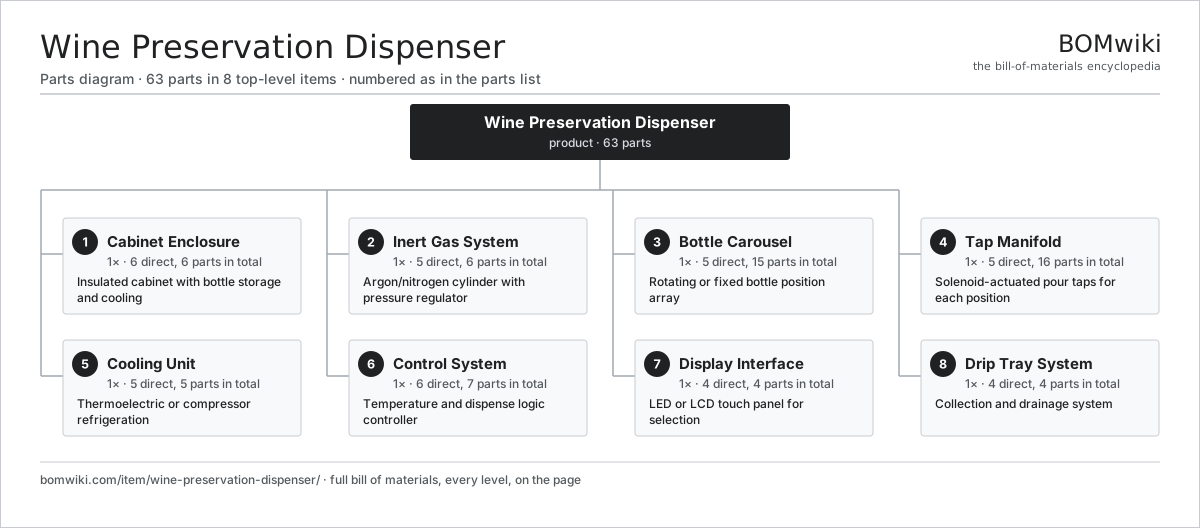
| # | Part | Qty | What it does |
|---|---|---|---|
| 1 | Cabinet Enclosure 6 parts | 1× | Insulated cabinet with bottle storage and cooling |
| 2 | Inert Gas System 5 parts | 1× | Argon/nitrogen cylinder with pressure regulator |
| 3 | Bottle Carousel 5 parts | 1× | Rotating or fixed bottle position array |
| 4 | Tap Manifold 5 parts | 1× | Solenoid-actuated pour taps for each position |
| 5 | Cooling Unit 5 parts | 1× | Thermoelectric or compressor refrigeration |
| 6 | Control System 6 parts | 1× | Temperature and dispense logic controller |
| 7 | Display Interface 4 parts | 1× | LED or LCD touch panel for selection |
| 8 | Drip Tray System 4 parts | 1× | Collection and drainage system |
3D model
No 3D model yet. Have a CAD file of this? Add a 3D model. STL renders right on this page; STEP, FreeCAD, and OpenSCAD sources are welcome too (openly licensed, like all 3D models on BOMwiki).
Build & assembly graph
expand / collapse · shared sub-assemblies converge · links to related products · est. labourTap an assembly to expand/collapse · tap a part to open it · use “Open page” for any node · drag to pan, scroll to zoom.
Bill of materials for Wine Preservation Dispenser
8 top-level lines · 48 rows shown · 63 parts total · indented to 3 levels| # | Item / sub-assembly | Part no. | Qty/assy | Ext. qty | Parts | Type |
|---|---|---|---|---|---|---|
| 1 | Cabinet Enclosure 6 parts | wine-preservation-dispenser-enclosure | 1× | 1 | 6 | assembly |
| 1.1 | Outer Shell | wine-preservation-dispenser-outer-shell | 1× | 1 | · | part |
| 1.2 | Inner Shell | wine-preservation-dispenser-inner-shell | 1× | 1 | · | part |
| 1.3 | Foam Insulation | wine-preservation-dispenser-foam-insulation | 1× | 1 | · | part |
| 1.4 | Glass Door | wine-preservation-dispenser-glass-door | 1× | 1 | · | part |
| 1.5 | Frame Structure | wine-preservation-dispenser-frame-structure | 1× | 1 | · | part |
| 1.6 | Fastener Set | fastener-set | 1× | 1 | · | part |
| 2 | Inert Gas System 5 parts | wine-preservation-dispenser-inert-gas-system | 1× | 1 | 6 | assembly |
| 2.1 | Gas Cylinder | wine-preservation-dispenser-gas-cylinder | 1× | 1 | · | part |
| 2.2 | Pressure Regulator | wine-preservation-dispenser-pressure-regulator | 1× | 1 | · | part |
| 2.3 | Gas Solenoid | wine-preservation-dispenser-gas-solenoid | 1× | 1 | · | part |
| 2.4 | Gas Line | wine-preservation-dispenser-gas-line | 1× | 1 | · | part |
| 2.5 | Connector | connector | 2× | 2 | · | part |
| 3 | Bottle Carousel 5 parts | wine-preservation-dispenser-bottle-carousel | 1× | 1 | 15 | assembly |
| 3.1 | Carousel Frame | wine-preservation-dispenser-carousel-frame | 1× | 1 | · | part |
| 3.2 | Bottle Holder | wine-preservation-dispenser-bottle-holder | 6× | 6 | · | part |
| 3.3 | Positioning Motor | wine-preservation-dispenser-positioning-motor | 1× | 1 | · | part |
| 3.4 | Gas Needle | wine-preservation-dispenser-gas-needle | 6× | 6 | · | part |
| 3.5 | Fastener Set | fastener-set | 1× | 1 | · | part |
| 4 | Tap Manifold 5 parts | wine-preservation-dispenser-tap-manifold | 1× | 1 | 16 | assembly |
| 4.1 | Solenoid Tap | wine-preservation-dispenser-solenoid-tap | 6× | 6 | · | part |
| 4.2 | Tap Outlet | wine-preservation-dispenser-tap-outlet | 6× | 6 | · | part |
| 4.3 | Tap Chamber | wine-preservation-dispenser-tap-chamber | 1× | 1 | · | part |
| 4.4 | Backpressure Valve | wine-preservation-dispenser-backpressure-valve | 1× | 1 | · | part |
| 4.5 | Connector | connector | 2× | 2 | · | part |
| 5 | Cooling Unit 5 parts | wine-preservation-dispenser-cooling-unit | 1× | 1 | 5 | assembly |
| 5.1 | Peltier Module | wine-preservation-dispenser-peltier-module | 1× | 1 | · | part |
| 5.2 | Heat Exchanger | wine-preservation-dispenser-heat-exchanger | 1× | 1 | · | part |
| 5.3 | Fan | wine-preservation-dispenser-fan | 1× | 1 | · | part |
| 5.4 | Condensate Drain | wine-preservation-dispenser-condensate-drain | 1× | 1 | · | part |
| 5.5 | Fastener Set | fastener-set | 1× | 1 | · | part |
| 6 | Control System 6 parts | wine-preservation-dispenser-control-system | 1× | 1 | 7 | assembly |
| 6.1 | Microcontroller | mcu | 1× | 1 | · | part |
| 6.2 | Temperature Sensor | wine-preservation-dispenser-temperature-sensor | 1× | 1 | · | part |
| 6.3 | Relay Array | wine-preservation-dispenser-relay-array | 1× | 1 | · | part |
| 6.4 | Bare PCB | pcb-bare | 1× | 1 | · | part |
| 6.5 | SMD Passive (R/C/L) | smd-passives | 1× | 1 | · | part |
| 6.6 | Connector | connector | 2× | 2 | · | part |
| 7 | Display Interface 4 parts | wine-preservation-dispenser-display-interface | 1× | 1 | 4 | assembly |
| 7.1 | LCD Panel | wine-preservation-dispenser-lcd-panel | 1× | 1 | · | part |
| 7.2 | LCD Controller | wine-preservation-dispenser-lcd-controller | 1× | 1 | · | part |
| 7.3 | Button Array | wine-preservation-dispenser-button-array | 1× | 1 | · | part |
| 7.4 | Connector | connector | 1× | 1 | · | part |
| 8 | Drip Tray System 4 parts | wine-preservation-dispenser-drip-tray | 1× | 1 | 4 | assembly |
| 8.1 | Drip Pan | wine-preservation-dispenser-drip-pan | 1× | 1 | · | part |
| 8.2 | Drain Tube | wine-preservation-dispenser-drain-tube | 1× | 1 | · | part |
| 8.3 | Drain Valve | wine-preservation-dispenser-drain-valve | 1× | 1 | · | part |
| 8.4 | Fastener Set | fastener-set | 1× | 1 | · | part |
Something wrong in this list? Report a problem with this BOM.
Related products
same domain, ranked by shared parts Aroma Diffuser
27 parts · shares 1 with this page
Aroma Diffuser
27 parts · shares 1 with this page
 Automatic Pet Feeder
51 parts · shares 1 with this page
Beverage Center
133 parts · shares 1 with this page
Beverage Refrigerator
122 parts · shares 1 with this page
Automatic Pet Feeder
51 parts · shares 1 with this page
Beverage Center
133 parts · shares 1 with this page
Beverage Refrigerator
122 parts · shares 1 with this page
 Bladeless Fan
64 parts · shares 1 with this page
Bladeless Fan
64 parts · shares 1 with this page
 Bottled Water Cooler
119 parts · shares 1 with this page
Bottled Water Cooler
119 parts · shares 1 with this page
Sourcing: possible vendors
Browse the supplier directory → Prices, MOQ, and lead times are algorithmic estimates, not quotes, and not claims about these companies. Company mappings are curated by keyword; est. price band $150–$3k. How estimates work| Vendor | HQ | Specialty | MOQ | Lead time |
|---|---|---|---|---|
| whirlpoolcorp.com ↗ | Benton Harbor, US | Home appliances | 1,000 units | 8–14 wks |
| bsh-group.com ↗ | Munich, DE | Appliances (Bosch, Siemens) | 1,000 units | 8–14 wks |
| electroluxgroup.com ↗ | Stockholm, SE | Home appliances | 1,000 units | 8–14 wks |
| lg.com ↗ | Seoul, KR | Appliances & electronics | 1,000 units | 8–14 wks |
|
🇨🇳Haier
haier.com ↗
|
Qingdao, CN | Home appliances | 1,000 units | 8–14 wks |
1,539-word article