Batting Cage System
ProductOverview
A batting cage system is a self-contained, coin-operated or card-operated automated baseball batting facility. The system combines a protective net enclosure, electric pitching machine, automatic ball feeding and return, and a timer mechanism. Users pay per session (typically 5–10 minutes), and the system automatically delivers baseballs at adjustable speeds and angles for the batter to hit.
Batting cages are found in indoor batting facilities, sports complexes, amusement parks, and family entertainment centers. They are used for recreational batting, baseball player training, and entertainment.
How it works
Enclosure and Safety. The Frame Structure is a steel structure defining the cage boundary. The Netting Enclosure encloses all sides and the roof, made of fine-mesh knotless nylon (3/8 to 1/2 inch aperture). The netting is sized to prevent baseballs from escaping while allowing visibility. The aperture is small enough to prevent a hand or finger from passing through (safety concern), but large enough to allow water drainage and air circulation.
The Flooring in the batter's box is a non-slip rubber mat providing stable, comfortable footing during the swing.
Pitching Machine. The Pitching Machine is a wheel-type pitcher using two counter-rotating wheels to grip and propel baseballs. The Machine Motor (1–2 hp electric motor) drives the wheels at variable speed. The Speed Controller adjusts wheel RPM between 10–90 mph, controlling pitch speed. The Angle Adjustor allows the operator or batter to adjust machine elevation, changing the pitch angle (fastball, curveball, drop ball).
Ball Feeding. The Ball Feeder is a hopper (reservoir) holding 100–200 baseballs. The Hopper Gate is a solenoid valve controlled by the timer or a manual release. When the user initiates a session (inserts coin/token), the gate opens intermittently, releasing balls into the Feed Chute, which directs them into the pitcher. The feed rate is typically 1 ball every 3–5 seconds, allowing the batter time to swing and reset between pitches.
Ball Return. As baseballs are hit (and miss) into the cage, they roll or fall to the floor. The Ball Return system collects balls in a Return Trough (a V-shaped channel running along the cage floor), which directs balls toward an incline. The Return Belt (a conveyor belt or chain lift driven by Return Motor) carries balls up the incline back into the hopper, creating a closed-loop system. A Return Deflector guides balls from the trough into the belt system.
Session Control. The Token Timer is an electronic control unit with a Coin Acceptor that validates coins or tokens. Upon valid payment, the timer is set (typically 5, 7.5, or 10 minutes depending on payment amount). The Timer Display shows remaining time. The timer drives a Power Relay that cuts power to the pitching machine and feeder at session end. A Speaker emits audio alerts as time is running out (e.g., beep at 30 seconds remaining).
Electrical System. The Power Distribution panel houses a Main Breaker, separate breakers for the pitching machine motor, feeder motor, and timer circuit, and all control wiring. The system typically draws 3–5 hp equivalent (2–4 kW) when the machine is running. Power is distributed via Conduit protecting wiring from damage.
Operational Considerations
Maintenance. The Netting Enclosure sustains wear and tears from baseballs and occasional bat contact. Netting is inspected weekly for holes or fraying; small holes are patched with Net Patches. The Pitching Machine wheels wear gradually and may require replacement every 500–1000 hours of operation. The Hopper Gate solenoid and Return Belt also require replacement due to wear.
Ball Management. Commercial facilities typically purchase baseballs in bulk (500+ count) and retire heavily scuffed or damaged balls. Batting cages consume balls at a high rate; a busy facility may go through 50–100 balls per week.
Machine Tuning. The Angle Adjustor allows operators to set machine angle for different pitch styles:
- Fastball: Horizontal or slight upward angle.
- Curveball: Adjusted wheel speed differential or angled approach creates side spin.
- Drop ball: Downward angle simulating gravity drop after initial pitch velocity.
Operators can switch between styles by adjusting the angle lever or remote control (some modern systems feature electronic angle adjustment).
Modern Variants
Contemporary batting cage systems often include:
- Speed readout: LED display showing pitch speed (calibrated via radar sensor).
- Swing analytics: High-speed camera and AI software analyzing swing biomechanics.
- Multiplayer stations: Networked cages allowing head-to-head competition or tracking scores across a facility.
- Mobile payment: NFC or QR code integration replacing physical coins, allowing prepaid accounts.
Some facilities integrate radar-based ball tracking, providing batters feedback on exit velocity, hit accuracy, and launch angle.
Safety Standards
Batting cage facilities must comply with ASTM F1487 (Standard Guide for Batting Cage Specifications). Key requirements:
- Netting aperture ≤ 1/2 inch (prevents hand/finger passage).
- Structural load capacity: 6× peak dynamic load from batters.
- Electrical safety: All exposed conductors in GFCI-protected circuits.
- Ball containment: 99.9% of pitched balls remain within cage.
Operators are responsible for inspecting netting before use and ensuring machines are properly maintained to prevent jamming or unpredictable pitch behavior.
Batting Cage System parts and their functions
8 top-level parts · 60 parts in total · full bill of materials below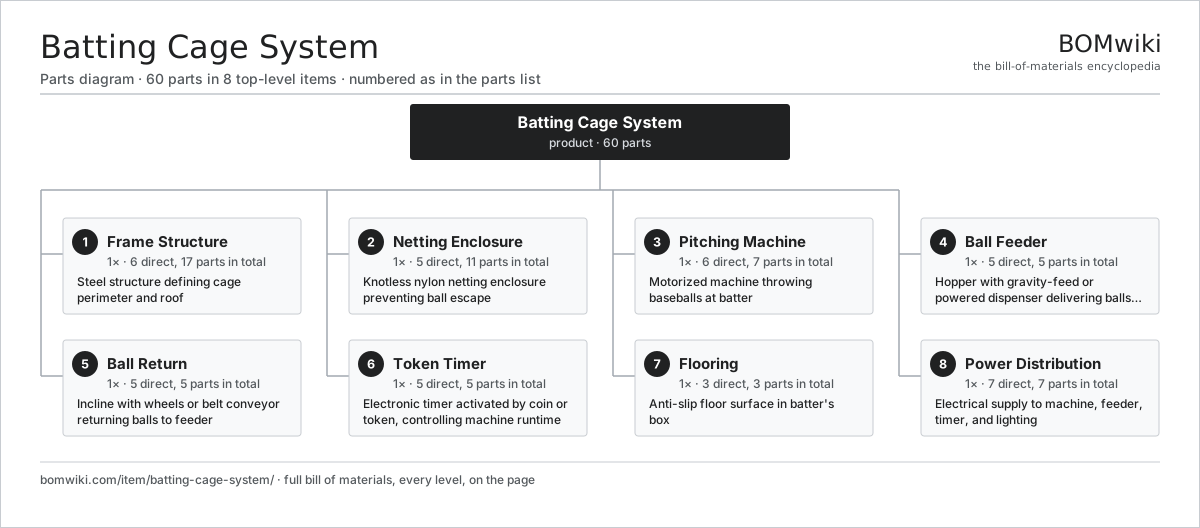
| # | Part | Qty | What it does |
|---|---|---|---|
| 1 | Frame Structure 6 parts | 1× | Steel structure defining cage perimeter and roof |
| 2 | Netting Enclosure 5 parts | 1× | Knotless nylon netting enclosure preventing ball escape |
| 3 | Pitching Machine 6 parts | 1× | Motorized machine throwing baseballs at batter |
| 4 | Ball Feeder 5 parts | 1× | Hopper with gravity-feed or powered dispenser delivering balls to pitcher |
| 5 | Ball Return 5 parts | 1× | Incline with wheels or belt conveyor returning balls to feeder |
| 6 | Token Timer 5 parts | 1× | Electronic timer activated by coin or token, controlling machine runtime |
| 7 | Flooring 3 parts | 1× | Anti-slip floor surface in batter's box |
| 8 | Power Distribution 7 parts | 1× | Electrical supply to machine, feeder, timer, and lighting |
3D model
No 3D model yet. Have a CAD file of this? Add a 3D model. STL renders right on this page; STEP, FreeCAD, and OpenSCAD sources are welcome too (openly licensed, like all 3D models on BOMwiki).
Build & assembly graph
expand / collapse · shared sub-assemblies converge · links to related products · est. labourTap an assembly to expand/collapse · tap a part to open it · use “Open page” for any node · drag to pan, scroll to zoom.
Bill of materials for Batting Cage System
8 top-level lines · 50 rows shown · 60 parts total · indented to 3 levels| # | Item / sub-assembly | Part no. | Qty/assy | Ext. qty | Parts | Type |
|---|---|---|---|---|---|---|
| 1 | Frame Structure 6 parts | batting-cage-system-frame | 1× | 1 | 17 | assembly |
| 1.1 | Front Post | batting-cage-system-front-post | 2× | 2 | · | part |
| 1.2 | Side Rail | batting-cage-system-side-rail | 2× | 2 | · | part |
| 1.3 | Back Post | batting-cage-system-back-post | 2× | 2 | · | part |
| 1.4 | Roof Beam | batting-cage-system-roof-beam | 2× | 2 | · | part |
| 1.5 | Batter Box Frame | batting-cage-system-batter-box-frame | 1× | 1 | · | part |
| 1.6 | Fastener Set | fastener-set | 8× | 8 | · | part |
| 2 | Netting Enclosure 5 parts | batting-cage-system-netting | 1× | 1 | 11 | assembly |
| 2.1 | Net Mesh | batting-cage-system-net-mesh | 1× | 1 | · | part |
| 2.2 | Net Frame Attachment | batting-cage-system-net-frame-attachment | 1× | 1 | · | part |
| 2.3 | Net Patches | batting-cage-system-net-patches | 4× | 4 | · | part |
| 2.4 | Side Net Panel | batting-cage-system-side-net-panel | 4× | 4 | · | part |
| 2.5 | Roof Net Panel | batting-cage-system-roof-net-panel | 1× | 1 | · | part |
| 3 | Pitching Machine 6 parts | batting-cage-system-pitching-machine | 1× | 1 | 7 | assembly |
| 3.1 | Machine Motor | batting-cage-system-machine-motor | 1× | 1 | · | part |
| 3.2 | Pitcher Wheel Pair | batting-cage-system-pitcher-wheel-pair | 1× | 1 | · | part |
| 3.3 | Wheel Bearing | batting-cage-system-wheel-bearing | 2× | 2 | · | part |
| 3.4 | Speed Controller | batting-cage-system-speed-controller | 1× | 1 | · | part |
| 3.5 | Machine Frame | batting-cage-system-machine-frame | 1× | 1 | · | part |
| 3.6 | Angle Adjustor | batting-cage-system-angle-adjustor | 1× | 1 | · | part |
| 4 | Ball Feeder 5 parts | batting-cage-system-ball-feeder | 1× | 1 | 5 | assembly |
| 4.1 | Hopper Bucket | batting-cage-system-hopper-bucket | 1× | 1 | · | part |
| 4.2 | Hopper Gate | batting-cage-system-hopper-gate | 1× | 1 | · | part |
| 4.3 | Feed Chute | batting-cage-system-feed-chute | 1× | 1 | · | part |
| 4.4 | Feed Motor | batting-cage-system-feed-motor | 1× | 1 | · | part |
| 4.5 | Hopper Sensor | batting-cage-system-hopper-sensor | 1× | 1 | · | part |
| 5 | Ball Return 5 parts | batting-cage-system-ball-return | 1× | 1 | 5 | assembly |
| 5.1 | Return Trough | batting-cage-system-return-trough | 1× | 1 | · | part |
| 5.2 | Return Belt | batting-cage-system-return-belt | 1× | 1 | · | part |
| 5.3 | Return Motor | batting-cage-system-return-motor | 1× | 1 | · | part |
| 5.4 | Return Deflector | batting-cage-system-return-deflector | 1× | 1 | · | part |
| 5.5 | Return Sensor | batting-cage-system-return-sensor | 1× | 1 | · | part |
| 6 | Token Timer 5 parts | batting-cage-system-token-timer | 1× | 1 | 5 | assembly |
| 6.1 | Coin Acceptor | batting-cage-system-coin-acceptor | 1× | 1 | · | part |
| 6.2 | Timer Display | batting-cage-system-timer-display | 1× | 1 | · | part |
| 6.3 | Timer Circuit | batting-cage-system-timer-circuit | 1× | 1 | · | part |
| 6.4 | Power Relay | batting-cage-system-power-relay | 1× | 1 | · | part |
| 6.5 | Speaker | batting-cage-system-speaker | 1× | 1 | · | part |
| 7 | Flooring 3 parts | batting-cage-system-flooring | 1× | 1 | 3 | assembly |
| 7.1 | Floor Mat | batting-cage-system-floor-mat | 1× | 1 | · | part |
| 7.2 | Floor Frame | batting-cage-system-floor-frame | 1× | 1 | · | part |
| 7.3 | Floor Edging | batting-cage-system-floor-edging | 1× | 1 | · | part |
| 8 | Power Distribution 7 parts | batting-cage-system-power-distribution | 1× | 1 | 7 | assembly |
| 8.1 | Electrical Panel | batting-cage-system-electrical-panel | 1× | 1 | · | part |
| 8.2 | Main Breaker | batting-cage-system-main-breaker | 1× | 1 | · | part |
| 8.3 | Motor Circuit | batting-cage-system-motor-circuit | 1× | 1 | · | part |
| 8.4 | Feeder Circuit | batting-cage-system-feeder-circuit | 1× | 1 | · | part |
| 8.5 | Control Circuit | batting-cage-system-control-circuit | 1× | 1 | · | part |
| 8.6 | Power Cord | batting-cage-system-power-cord | 1× | 1 | · | part |
| 8.7 | Conduit | batting-cage-system-conduit | 1× | 1 | · | part |
Something wrong in this list? Report a problem with this BOM.
Sourcing: possible vendors
Browse the supplier directory → Prices, MOQ, and lead times are algorithmic estimates, not quotes, and not claims about these companies. Company mappings are curated by keyword; est. price band $20–$3k. How estimates work| Vendor | HQ | Specialty | MOQ | Lead time |
|---|---|---|---|---|
|
🇩🇰LEGO
lego.com ↗
|
Billund, DK | Construction toys | 2,000 units | 6–10 wks |
|
🇺🇸Mattel
mattel.com ↗
|
El Segundo, US | Toys | 2,000 units | 6–10 wks |
|
🇺🇸Hasbro
hasbro.com ↗
|
Pawtucket, US | Toys & games | 2,000 units | 6–10 wks |
| bandainamco.co.jp ↗ | Tokyo, JP | Toys & amusement | 2,000 units | 6–10 wks |
| spinmaster.com ↗ | Toronto, CA | Toys | 2,000 units | 6–10 wks |
933-word article