AeroPress Coffee Maker
ProductOverview
The AeroPress is a manual coffee maker that brews by combining immersion with gentle air pressure. Ground coffee and hot water steep together briefly in a tube, then the brewer presses a plunger down by hand, and the air trapped above the water forces the brew through a paper filter and into the cup below. It was introduced in 2005 and became popular for being fast, forgiving, easy to clean, and small enough to travel with. It makes a clean, low-bitterness cup that sits somewhere between filter coffee and espresso depending on how it is brewed. The short steep and the gentle press together keep bitterness low, and because the brewer controls the grind, the water temperature, the steep time, and the press speed, the same device can be dialed toward a light filter-style cup or a dense concentrate diluted to taste.
The device is a short stack of parts. The Brewing Chamber holds the coffee and water, the Plunger supplies the pressure, and the Filter Cap holds the Paper Filter Pack paper against the brew. A Loading Funnel, Coffee Scoop, and Stirring Paddle round out the kit.
How it brews
Brewing starts as immersion and finishes as pressure. A paper Paper Filter Pack goes inside the Filter Cap, which screws onto the bottom of the Brewing Chamber. Ground coffee and hot water go into the chamber, where they steep for a short time while the brewer stirs with the Stirring Paddle. Then the Plunger is inserted and pressed slowly down. Its Plunger Seal seals against the chamber wall, so as the plunger descends it compresses the air above the water; that pressure pushes the brewed coffee down through the grounds, through the paper filter, and out into the cup. The whole press takes well under a minute, which is part of why the method extracts cleanly without the long contact that turns coffee bitter.
The chamber
The Brewing Chamber is the brewing cylinder. Its Chamber Tube is clear copolyester marked with graduations so the brewer can measure water by sight. A Chamber Flange at the top stops the plunger seal from sliding out, and a Chamber Thread at the bottom takes the filter cap. The chamber doubles as the pressure cylinder for the plunger, so its bore is held to a tight tolerance: too loose and the seal leaks air, too tight and the plunger jams. The clear material lets the brewer watch the slurry and the plunge.
The plunger and seal
The Plunger turns hand force into brew pressure. Its Plunger Body slides inside the chamber, capped by the Push Cap the user presses on. The working part is the Plunger Seal, a flexible rubber skirt that wipes the chamber wall and keeps the air column sealed. The seal is the main wear part: over years it can stiffen and lose its grip, at which point the plunge starts to leak and the seal is replaced. The plunger never has to reach the coffee bed; the brewer stops pressing once air starts to hiss through, which signals the water is spent.
Filter cap and filtration
The Filter Cap holds back the grounds. Its Cap Body is a grid of small holes that supports a single paper Paper Filter Pack disc, and a Cap Thread screws it onto the chamber. The paper has a fine pore, around twenty microns, so it catches the fine particles and most of the oils that a metal mesh would let through. That is the main reason the cup tastes clean and free of sediment. Some users fit a reusable metal disc instead to get a heavier body, trading the paper's clarity for more oils in the cup.
Variants and use
The original AeroPress is the full-size model described here; a smaller travel version and a clear all-plastic version exist with the same working principle. Two brewing styles dominate. The standard method assembles the cap and chamber upright over the cup and presses straight through. The inverted method flips the device so the plunger is at the bottom during the steep, which lets the coffee steep longer without dripping early, and the whole thing is turned over onto the cup before pressing. Either way cleanup is the device's strongest selling point: unscrewing the Filter Cap and pressing the plunger the last centimetre ejects the spent grounds and the paper as a single dry puck, leaving only a quick rinse of the Plunger Seal and chamber. That fast, near-mess-free cleanup is why the AeroPress is a common choice for travel, camping, and office desks, where a French press or a full pour-over setup would be awkward to clean and carry.
AeroPress Coffee Maker parts and their functions
7 top-level parts · 12 parts in total · full bill of materials below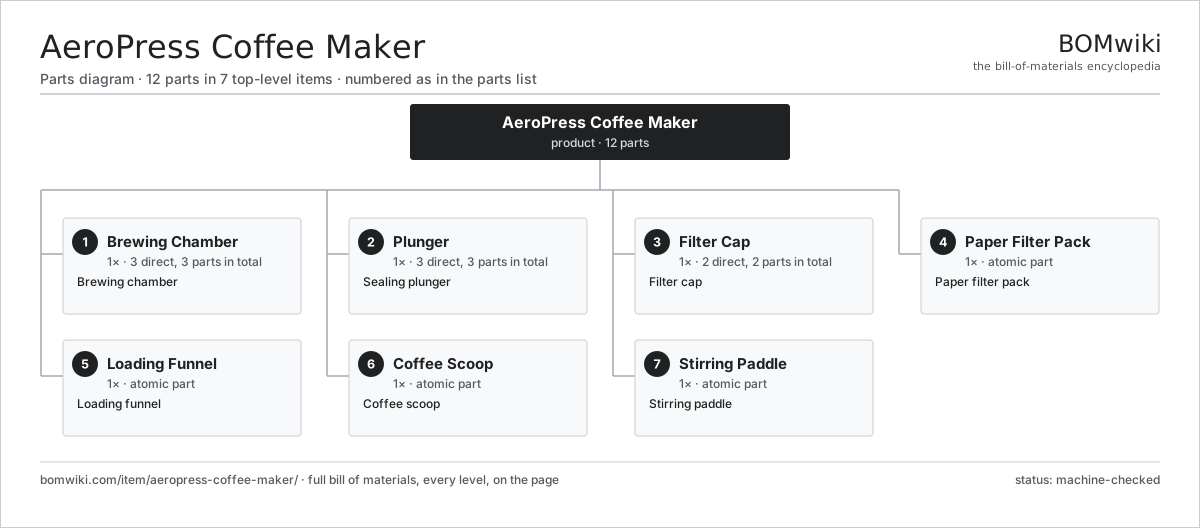
| # | Part | Qty | What it does |
|---|---|---|---|
| 1 | Brewing Chamber 3 parts | 1× | Brewing chamber |
| 2 | Plunger 3 parts | 1× | Sealing plunger |
| 3 | Filter Cap 2 parts | 1× | Filter cap |
| 4 | Paper Filter Pack | 1× | Paper filter pack |
| 5 | Loading Funnel | 1× | Loading funnel |
| 6 | Coffee Scoop | 1× | Coffee scoop |
| 7 | Stirring Paddle | 1× | Stirring paddle |
3D model
No 3D model yet. Have a CAD file of this? Add a 3D model. STL renders right on this page; STEP, FreeCAD, and OpenSCAD sources are welcome too (openly licensed, like all 3D models on BOMwiki).
Build & assembly graph
expand / collapse · shared sub-assemblies converge · links to related products · est. labourTap an assembly to expand/collapse · tap a part to open it · use “Open page” for any node · drag to pan, scroll to zoom.
Bill of materials for AeroPress Coffee Maker
7 top-level lines · 15 rows shown · 12 parts total · indented to 3 levels| # | Item / sub-assembly | Part no. | Qty/assy | Ext. qty | Parts | Type |
|---|---|---|---|---|---|---|
| 1 | Brewing Chamber 3 parts | aeropress-coffee-maker-chamber | 1× | 1 | 3 | assembly |
| 1.1 | Chamber Tube | aeropress-coffee-maker-chamber-tube | 1× | 1 | · | part |
| 1.2 | Chamber Flange | aeropress-coffee-maker-chamber-flange | 1× | 1 | · | part |
| 1.3 | Chamber Thread | aeropress-coffee-maker-chamber-thread | 1× | 1 | · | part |
| 2 | Plunger 3 parts | aeropress-coffee-maker-plunger | 1× | 1 | 3 | assembly |
| 2.1 | Plunger Body | aeropress-coffee-maker-plunger-tube | 1× | 1 | · | part |
| 2.2 | Plunger Seal | aeropress-coffee-maker-plunger-seal | 1× | 1 | · | part |
| 2.3 | Push Cap | aeropress-coffee-maker-plunger-cap | 1× | 1 | · | part |
| 3 | Filter Cap 2 parts | aeropress-coffee-maker-filter-cap | 1× | 1 | 2 | assembly |
| 3.1 | Cap Body | aeropress-coffee-maker-cap-body | 1× | 1 | · | part |
| 3.2 | Cap Thread | aeropress-coffee-maker-cap-thread | 1× | 1 | · | part |
| 4 | Paper Filter Pack | aeropress-coffee-maker-filter | 1× | 1 | · | part |
| 5 | Loading Funnel | aeropress-coffee-maker-funnel | 1× | 1 | · | part |
| 6 | Coffee Scoop | aeropress-coffee-maker-scoop | 1× | 1 | · | part |
| 7 | Stirring Paddle | aeropress-coffee-maker-stirrer | 1× | 1 | · | part |
Sourcing: possible vendors
Browse the supplier directory → Prices, MOQ, and lead times are algorithmic estimates, not quotes, and not claims about these companies. Company mappings are curated by keyword; est. price band $20–$600. How estimates work| Vendor | HQ | Specialty | MOQ | Lead time |
|---|---|---|---|---|
|
🇦🇺Breville
breville.com ↗
|
Sydney, AU | Kitchen appliances | 2,000 units | 6–10 wks |
| groupeseb.com ↗ | Écully, FR | Cookware & small appliances | 2,000 units | 6–10 wks |
| hamiltonbeach.com ↗ | Glen Allen, US | Small appliances | 2,000 units | 6–10 wks |
| panasonic.com ↗ | Osaka, JP | Electronics & appliances | 2,000 units | 6–10 wks |
|
🇨🇳Midea
midea.com ↗
|
Foshan, CN | Home appliances | 2,000 units | 6–10 wks |
853-word article