Makeup Train Case
ProductOverview
A makeup train case is a professional cosmetics storage and transport container used by makeup artists, cosmetologists, and theatrical professionals. The defining feature is the cantilever tray system: multiple spring-loaded trays that fan out when the lid opens, providing instant access to hundreds of cosmetics, brushes, and tools.
Unlike consumer makeup organizers (storage boxes), professional train cases are engineered for durability, capacity, and organization. A makeup artist traveling between clients might carry 200+ products (foundations, eyeshadows, brushes, applicators) requiring organized compartmentalization. The train case keeps everything protected, organized, and mobile.
The term "train case" originated from 1920s–1940s luggage terminology; beauty supply versions emerged in the 1960s and remain the industry standard.
Shell & Frame Design
The Case Exterior comprises:
- Base Shell: Molded ABS plastic (lightweight, impact-resistant) or polypropylene.
- Lid Shell: Hinged top with integrated mirror mount.
- Aluminum Frame Trim: Protective aluminum edge trim (anodized to prevent corrosion).
- Corner Bumper: Reinforced plastic or rubber guards at all eight corners.
Material selection:
- ABS plastic: Ideal; durable, thermoformable into complex shapes, resists impacts.
- Aluminum (full-frame, premium models): Heavier, more expensive, excellent durability.
- Polypropylene: Economical but less durable under repeated use.
Hinge system (Hinge): Dual heavy-duty hinges supporting the lid and up to 10+ kg of contents. The hinge allows 180° or near-180° opening, exposing all tray compartments simultaneously.
Cantilever Tray Mechanism
The Cantilever Tray System is the core organizational feature. Multiple trays deploy automatically when the lid opens:
Typical 3-tray configuration:
- Left tray: Hinged on the left side, swings out and upward.
- Center tray: Mounted on the center rail; lifts or folds forward.
- Right tray: Mirrors the left tray, swinging out on the right side.
Mechanical operation:
- Tray Linkage: Arms connected to the lid; as the lid opens backward, linkages push the trays outward.
- Tray springs: Individual compression springs return each tray to the closed position when the lid closes.
- Result: Full 180° tray deployment when the case is fully open, then automatic retraction when closing.
Compartment types:
- Small round compartments (1 inch diameter): Eyeshadow pans, blushes, pressed powders.
- Rectangular compartments (2×1 inch): Lipsticks, pencils, liners.
- Large compartments (3×2 inch): Foundation bottles, cream products, brushes.
- Brush holders: Elastic loops holding 20–30 makeup brushes vertically.
Compartment count: Typical case contains 25–40 individual bins, accommodating 200–400 products depending on size and organization.
Mirror Assembly
The Interior Mirror Assembly includes:
- Mirror Glass: High-quality beveled glass (2–3 mm thickness) providing distortion-free reflection.
- Mirror Frame: Plastic or chrome-plated metal frame protecting the glass edges.
- Mirror Hinge: Friction hinge allowing the mirror to be adjusted to any angle (45°, 90°, 180°) and remain in place.
Optional features:
- LED lighting strips: Battery-powered (3–4 AAA batteries) LED strips flanking the mirror, providing bright illumination for detailed makeup application.
- Magnification: Some premium models include a magnifying mirror insert (5–10x magnification) for precision work.
Positioning: The mirror is mounted on the interior of the lid, directly above the tray system, allowing the makeup artist to see their work while accessing products from the trays below.
Drawer System
Some train cases include one or two removable drawer compartments at the base:
- Drawer Frame: Slide-out compartment with multiple internal dividers.
- Drawer Glide: Plastic or metal slide guides allowing smooth drawer extension and retraction.
- Capacity: Additional storage for brushes, applicators, cotton pads, or bulky items that don't fit in the tray compartments.
Organization:
- Large items (brushes, sponges, cotton pads) in the drawer.
- Cosmetics (powders, creams, liquids) in the tray compartments.
- Separation prevents heavy items from crushing delicate cosmetics.
Lock System
The Combination Lock Assembly consists of two combination locks (left and right sides):
- Combination Dial: Three rotating dials (0–9) per lock, providing 1,000 possible combinations per lock.
- Lock Latch: Mechanical latch engaging both the left and right sides simultaneously.
Security:
- Basic locks prevent casual opening during transport but are not theft-proof.
- Purpose: Ensure the case doesn't accidentally open during travel or on set; prevent curious onlookers from poking into the contents.
Combination protocol:
- Makeup artist sets a personal code, typically memorable but not obvious.
- After each use, the locks are engaged.
- Lost combinations can be resolved by replacing the lock assembly (~$20–50 per lock).
Handle & Portability
Three handle configurations enable different carrying modes:
- Top Handle: Central top handle for one-handed carry (lighter cases, short distances).
- Side handles: Two side grips for two-person carries (heavier cases, longer distances).
- All handles are rubberized for comfort and non-slip grip, essential when hands are wet or carrying during humid conditions.
Load distribution: A fully loaded train case weighs 8–15 kg; professional designs distribute this load across multiple handles to prevent strain injuries.
Protective Feet & Bumpers
The Handles and Feet includes:
- Rubber feet: Four elastomer feet on the base, preventing sliding and protecting floors.
- Corner Bumper: Eight reinforced bumpers at all corners, absorbing impact if the case is dropped or knocked against walls.
Functional benefit: Protects both the case finish and the contents; impacts absorbed by the bumpers reduce shock transmitted to compartmented cosmetics inside.
Interior Finish & Organization
The interior is typically lined with:
- Fabric lining (nylon or cotton) protecting cosmetics from shell abrasion.
- Color: Usually black, navy, or burgundy; darker colors hide cosmetic spills and dust.
- Additional features: Label areas on compartments (stickers or engraved ID) allow organization by cosmetic type or category.
Professional organization schemes:
- By product type: All foundations in one tray, eyeshadows in another, lip products in drawers.
- By client: Each compartment labeled with a client's name (if doing bridal makeup on multiple people).
- By color family: Blues together, reds together, neutrals separated.
Durability & Maintenance
A professional makeup train case lasts 8–15+ years with proper care:
| Component | Lifespan | Failure Mode |
|---|---|---|
| ABS shell | 12–15 years | Cracking (impact), discoloration |
| Hinges | 10–12 years | Loosening, hinge pin wear |
| Latches/locks | 5–10 years | Lock mechanism jamming, combination wear |
| Mirror | 8–10 years | Cracking, fogging (moisture on glass) |
| Trays | 8–12 years | Spring fatigue, compartment cracking |
| Drawer slides | 5–8 years | Wear, binding, drawer jamming |
| Rubber feet | 5–7 years | Flattening, reduced grip |
Maintenance:
- Clean weekly: Wipe exterior with damp cloth; remove spilled cosmetics from compartments.
- Disinfect: Alcohol wipes on trays and compartments weekly (salon hygiene standard).
- Organize monthly: Rearrange compartments as needed; check for loose dividers.
- Inspect hinges/locks quarterly: Tighten bolts if loose; lubricate hinge pins with light machine oil if stiff.
- Replace rubber feet annually: Worn feet reduce grip and increase case mobility.
- Replace springs if weak: Slow tray deployment indicates spring fatigue; replacement ~$30–50 per spring set.
Storage:
- Store in cool, dry location (not in hot trunk or damp basement).
- Leave locks open if storing for >1 month (reduces lock fatigue, prevents spring compression).
- Remove cosmetics if storing for extended period (prevents cosmetic spills and staining).
Professional vs. Consumer Makeup Cases
| Feature | Train Case | Soft Organizer | Plain Cosmetic Box |
|---|---|---|---|
| Organization | Excellent (cantilever) | Good (pockets) | Fair (open storage) |
| Capacity | 200–400 items | 100–200 items | 50–100 items |
| Portability | Moderate (heavy) | Easy (light) | Easy (light) |
| Durability | 8–15 years | 3–5 years | 2–4 years |
| Cost | $80–300 | $40–100 | $20–50 |
| Professional Use | Yes (standard) | Yes (travel) | Occasional |
Train cases are the professional standard for makeup artistry; soft organizers appeal to casual users and travelers; plain boxes suit beginners or personal use.
Market Variants
High-end brands (MAC, professional salon brands): Premium materials, mirror with LED lights, warranty coverage ($150–300).
Mid-range (Target, Amazon): Standard train case, basic mirror, adequate locks, serviceable components ($60–120).
Budget models (dollar stores): Simplified tray design, plastic mirrors, weak latches, shorter lifespan ($20–50).
Professional makeup artists typically invest in mid- to high-end cases for reliability and longevity; the case becomes a long-term asset, often lasting through entire careers.
Makeup Train Case parts and their functions
6 top-level parts · 64 parts in total · full bill of materials below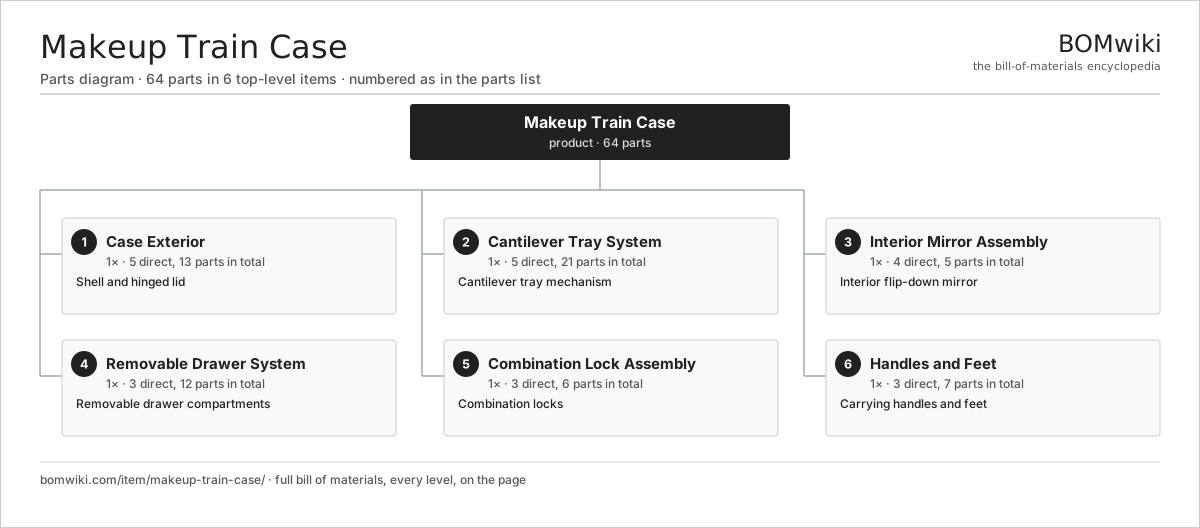
| # | Part | Qty | What it does |
|---|---|---|---|
| 1 | Case Exterior 5 parts | 1× | Shell and hinged lid |
| 2 | Cantilever Tray System 5 parts | 1× | Cantilever tray mechanism |
| 3 | Interior Mirror Assembly 4 parts | 1× | Interior flip-down mirror |
| 4 | Removable Drawer System 3 parts | 1× | Removable drawer compartments |
| 5 | Combination Lock Assembly 3 parts | 1× | Combination locks |
| 6 | Handles and Feet 3 parts | 1× | Carrying handles and feet |
3D model
No 3D model yet. Have a CAD file of this? Add a 3D model. STL renders right on this page; STEP, FreeCAD, and OpenSCAD sources are welcome too (openly licensed, like all 3D models on BOMwiki).
Build & assembly graph
expand / collapse · shared sub-assemblies converge · links to related products · est. labourTap an assembly to expand/collapse · tap a part to open it · use “Open page” for any node · drag to pan, scroll to zoom.
Bill of materials for Makeup Train Case
6 top-level lines · 29 rows shown · 64 parts total · indented to 3 levels| # | Item / sub-assembly | Part no. | Qty/assy | Ext. qty | Parts | Type |
|---|---|---|---|---|---|---|
| 1 | Case Exterior 5 parts | makeup-train-case-exterior | 1× | 1 | 13 | assembly |
| 1.1 | Base Shell | makeup-train-case-base-shell | 1× | 1 | · | part |
| 1.2 | Lid Shell | makeup-train-case-lid-shell | 1× | 1 | · | part |
| 1.3 | Aluminum Frame Trim | makeup-train-case-aluminum-frame | 1× | 1 | · | part |
| 1.4 | Corner Bumper | makeup-train-case-corner-bumpers | 8× | 8 | · | part |
| 1.5 | Hinge | makeup-train-case-hinge | 2× | 2 | · | part |
| 2 | Cantilever Tray System 5 parts | makeup-train-case-tray-system | 1× | 1 | 21 | assembly |
| 2.1 | Tray Linkage | makeup-train-case-tray-linkage | 1× | 1 | · | part |
| 2.2 | Tray Shelf | makeup-train-case-tray-shelf | 3× | 3 | · | part |
| 2.3 | Brush Holder | makeup-train-case-brush-holder | 2× | 2 | · | part |
| 2.4 | Tray Spring | makeup-train-case-tray-spring | 3× | 3 | · | part |
| 2.5 | Storage Compartment | makeup-train-case-compartment | 12× | 12 | · | part |
| 3 | Interior Mirror Assembly 4 parts | makeup-train-case-mirror-assembly | 1× | 1 | 5 | assembly |
| 3.1 | Mirror Glass | makeup-train-case-mirror-glass | 1× | 1 | · | part |
| 3.2 | Mirror Frame | makeup-train-case-mirror-frame | 1× | 1 | · | part |
| 3.3 | Mirror Hinge | makeup-train-case-mirror-hinge | 1× | 1 | · | part |
| 3.4 | LED Light Strip | makeup-train-case-mirror-light | 2× | 2 | · | part |
| 4 | Removable Drawer System 3 parts | makeup-train-case-drawer-system | 1× | 1 | 12 | assembly |
| 4.1 | Drawer Frame | makeup-train-case-drawer-frame | 2× | 2 | · | part |
| 4.2 | Drawer Divider | makeup-train-case-drawer-divider | 6× | 6 | · | part |
| 4.3 | Drawer Glide | makeup-train-case-drawer-glide | 4× | 4 | · | part |
| 5 | Combination Lock Assembly 3 parts | makeup-train-case-lock-system | 1× | 1 | 6 | assembly |
| 5.1 | Lock Body | makeup-train-case-lock-body | 2× | 2 | · | part |
| 5.2 | Combination Dial | makeup-train-case-lock-dial | 2× | 2 | · | part |
| 5.3 | Lock Latch | makeup-train-case-lock-latch | 2× | 2 | · | part |
| 6 | Handles and Feet 3 parts | makeup-train-case-handle-feet | 1× | 1 | 7 | assembly |
| 6.1 | Top Handle | makeup-train-case-handle-top | 1× | 1 | · | part |
| 6.2 | Side Handle | makeup-train-case-handle-side | 2× | 2 | · | part |
| 6.3 | Rubber Foot | makeup-train-case-rubber-foot | 4× | 4 | · | part |
Something wrong in this list? Report a problem with this BOM.
Sourcing: possible vendors
Browse the supplier directory → Prices, MOQ, and lead times are algorithmic estimates, not quotes, and not claims about these companies. Company mappings are curated by keyword; est. price band $20–$2k. How estimates work| Vendor | HQ | Specialty | MOQ | Lead time |
|---|---|---|---|---|
|
🇺🇸Coleman
coleman.com ↗
|
Chicago, US | Camping gear | 1,000 units | 6–10 wks |
| thenorthface.com ↗ | Denver, US | Outdoor apparel & gear | 1,000 units | 6–10 wks |
|
🇺🇸YETI
yeti.com ↗
|
Austin, US | Coolers & drinkware | 1,000 units | 6–10 wks |
| decathlon.com ↗ | Villeneuve-d'Ascq, FR | Sporting goods | 1,000 units | 6–10 wks |
|
🇺🇸Garmin
garmin.com ↗
|
Olathe, US | GPS & wearables | 1,000 units | 6–10 wks |
1,402-word article