Pet Travel Carrier
ProductOverview
A pet travel carrier is a portable enclosure designed for safe, humane transport of cats, small dogs, rabbits, and other small animals via air, car, or public transportation. The design balances three competing requirements: secure containment (preventing escape or injury), ventilation (adequate airflow), and animal comfort (space, padding, visibility).
Airline standards (IATA, FAA, TSA) mandate specific carrier designs for in-cabin or cargo transport, making most commercial pet carriers airline-compliant by default. A quality carrier allows pets to stand, turn, and lie down in a natural position, the international standard for humane transport.
Shell Construction
The Carrier Shell comprises two upper and lower polypropylene halves, injection-molded as complete units:
Material choice (polypropylene):
- Lightweight (0.9 g/cm³, ideal for air travel weight restrictions).
- Impact-resistant: Absorbs drops without cracking.
- Food-safe: Non-toxic if chewed by animals.
- Easy to clean: Smooth surface, resistant to staining.
- Durable: 5–10 year lifespan; slight discoloration but functional integrity maintained.
Molded features:
- Door Frame Cutout: Rectangular opening (6–10 inches wide) for the wire door.
- Internal ribbing: Subtle ribs (visible on interior) reinforce the shell.
- Ventilation integration: Vents molded into the shells (no additional parts required).
- Smooth interior: No sharp edges (safety for animals).
Structural integrity:
- Wall thickness: 2–3 mm; thicker plastic increases weight (problematic for air travel).
- Stress points: Corners and edges (where bolts attach) are thickened to prevent cracking.
- Shell capacity: 8–35 kg depending on size; excessive weight causes warping.
Door System
The Wire Door with Latch is the critical security feature:
- Wire Door: Welded stainless steel or zinc-plated wire grid (0.5–1 inch mesh, preventing escape but allowing visibility).
- Door Latch: Spring-loaded mechanism; pushing the latch downward releases the door; the spring automatically re-engages when released.
- Door Hinge: Single hinge on one side, allowing the door to swing inward.
Latch design details:
- Spring mechanism: Compression spring (0.5–1 inch travel) provides clamp force of 5–10 newtons; sufficient to prevent a cat or small dog from pushing the door open, but easily opened by a human finger.
- Wear resistance: Stainless steel or chromium-plated components resist corrosion from pet saliva and moisture.
- Two-point engagement: Some premium models have latches on both top and bottom, preventing the door from flexing at the center.
Failure modes:
- Spring fatigue: After 500+ open/close cycles, the spring weakens; door becomes loose.
- Latch wear: Corners of the latch round over, reducing engagement and allowing lateral door movement.
- Corrosion: Non-stainless wire rusts if exposed to moisture; zinc plating delays but doesn't prevent this.
Ventilation Ports
The Ventilation System system comprises multiple ports providing fresh air circulation:
Port locations:
- Front: Around the door opening.
- Sides: Two vents per side.
- Top: One or two roof vents.
- Bottom: Typically none (allows bedding to absorb wetness).
Ventilation flow:
- Natural convection: Warm air inside rises and exits top vents; cool air enters lower front vents.
- Turbulent mixing: Typical carrier provides 2–3 complete air changes per hour if left in still air; motion in a vehicle increases air exchange.
Airflow adequacy:
- IATA standard: Minimum 16 cubic feet of air volume per animal transport hour; typical carriers easily exceed this.
- In-cabin flight: Pressurized cabin air circulation (12 air changes per hour) is supplemented by the carrier's ventilation.
Mesh screening (Mesh Screen):
- Purpose: Prevents paws or nose from poking through vents (risk of injury or escape).
- Material: Plastic mesh, 0.5 inch openings typical.
- Attachment: Glued or riveted to the exterior, difficult to remove without damaging the carrier.
Hinge & Assembly
The Shell Hinge Assembly joins the two shell halves:
- Location: Top edge or sides (top is most common).
- Type: Usually stainless steel or zinc-plated metal hinges with threaded bolts.
- Bolts: Plastic-knob bolts (no tools required) facilitate field assembly and disassembly.
Assembly procedure:
- Lower shell and upper shell are aligned.
- Hinges are bolted through pre-drilled holes.
- Door and latches are installed.
- Interior fabric pad is placed inside.
- Bolts are tightened (finger-tight; over-tightening can crack shell).
Disassembly: For cleaning, the entire carrier can be opened by removing 6–10 bolts, allowing full access to the interior.
Handle System
Two handle configurations enable different carrying modes:
- Top Handle: Arched handle on top; supports the full weight of pet + carrier during carrying.
- Side handles (optional): Two side grips for two-person carries (useful for very large dogs or elderly owners).
Load capacity: A well-designed handle supports 30–40 kg without bending or cracking. Weak designs may flex, creating concern about durability.
Ergonomics: Handles are typically 2–3 inches long, accommodating palm grip. Rubberized coating (on premium models) prevents hand slipping when hands are wet.
Interior Comfort
The Interior Lining provides comfort and moisture absorption:
- Fabric Pad: Removable washable fabric pad (polyester or cotton), typically 1–2 inches thick.
- Cushion Foam: Foam padding underneath, providing some shock absorption.
- Mesh Panel: Breathable mesh on interior walls, improving air circulation and allowing animals to see outside.
Washability:
- Pad removes easily via zippers or velcro.
- Washable in normal washing machine (cold water, mild detergent).
- Drying: Air dry fully (24–48 hours) before re-installing to prevent mold growth.
Comfort considerations:
- Space: Animal should be able to stand, turn 360°, and lie down fully stretched.
- Padding: Reduces impact shock from vehicle braking or drops; crucial for safety.
- Ventilation: Mesh lining prevents bedding from completely blocking ventilation.
Airline Compliance
IATA (International Air Transportation Association) sets standards for pet carriers:
Required dimensions (approximate):
- Length = animal body length + 0.5 feet.
- Width & height = animal height (standing) + 0.5 feet.
- Minimum sizes: Small (cats, rabbits) 16×12×9 inches; Medium (small dogs) 20×14×11 inches; Large (medium dogs) 26×17×15 inches.
Material requirements:
- Rigid construction (polypropylene, ABS plastic).
- Secure latches preventing escape.
- Ventilation on at least 3 sides.
- Leak-proof bottom (if pet has bowel accident, liquid doesn't escape).
Compliance verification:
- Most commercial carriers display IATA certification or markings.
- Non-compliance carriers are refused at airline check-in; replacements may be provided by the airline (costly).
Airline-specific rules:
- Most airlines allow one pet per carrier.
- Weight restrictions: In-cabin pets typically <10 kg; cargo pets <50 kg.
- Temperature range: Aircraft cargo holds are heated (40–60°F); adequate for most pets, but dangerous for flat-faced breeds (Bulldogs, Persians).
Durability & Maintenance
A well-cared-for pet carrier lasts 5–10 years:
| Component | Lifespan | Failure Mode |
|---|---|---|
| Polypropylene shell | 8–10 years | Cracking (impact), color fading |
| Wire door | 5–8 years | Rust (if zinc coating compromised), mesh separation |
| Door latch | 3–5 years | Spring fatigue, latch wear |
| Hinges | 6–10 years | Corrosion, bolt loosening |
| Interior pad | 2–4 years | Fabric wear, foam compression |
| Handles | 5–8 years | Bracket loosening, handle cracking |
Maintenance:
- Wash after every trip: Pets shed hair, dander, and occasionally soil themselves; periodic cleaning prevents odor and bacterial growth.
- Inspection: Monthly check of latches, hinges, and bolts for looseness or corrosion.
- Ventilation check: Ensure mesh screens are not clogged with hair (blocking airflow).
- Pad replacement: If padding becomes flat (compression set) after 2–3 years, replacements are inexpensive ($20–40).
- Storage: Keep in cool, dry location; avoid prolonged sun exposure (UV degrades plastic).
Comparison: Pet Carrier Types
| Type | Material | Weight | Portability | Cost | Best For |
|---|---|---|---|---|---|
| Hard-shell (plastic) | Polypropylene | 1.5–3 kg | Moderate | $30–80 | Airline travel, cats, small dogs |
| Soft-sided (fabric) | Polyester + mesh | 0.5–1.5 kg | Excellent | $40–120 | Car travel, elderly pets, short trips |
| Collapsible (pop-up) | Nylon + mesh | 0.3–1 kg | Excellent (folds) | $20–60 | Emergency, temporary use |
| Wire cage | Steel wire | 1–3 kg | Poor | $25–70 | Crate training, home use only |
Hard-shell plastic carriers dominate airline travel due to durability, ease of cleaning, and regulatory compliance.
Special Considerations
Large breed dogs: Dogs >35 kg typically require cargo transport (not in-cabin). Carriers must be ventilated and temperature-controlled.
Anxious pets: Some animals experience severe stress in carriers. Recommendations include:
- Gradual desensitization: Leave the carrier open at home for weeks before travel.
- Familiar bedding: Use the pet's regular blanket (scent reduces anxiety).
- Light cover: Draping a blanket over three sides darkens the interior, reducing visual stimulus.
Flat-faced breeds: Bulldogs, Persians, and similar breeds are brachycephalic (compromised airway); they are at risk during air cargo transport due to temperature and stress. Airlines often prohibit in-cargo transport for these breeds.
Multiple pets: Some carriers allow two small animals (e.g., two kittens); this requires extra space and careful introduction to avoid fighting.
Pet Travel Carrier parts and their functions
7 top-level parts · 57 parts in total · full bill of materials below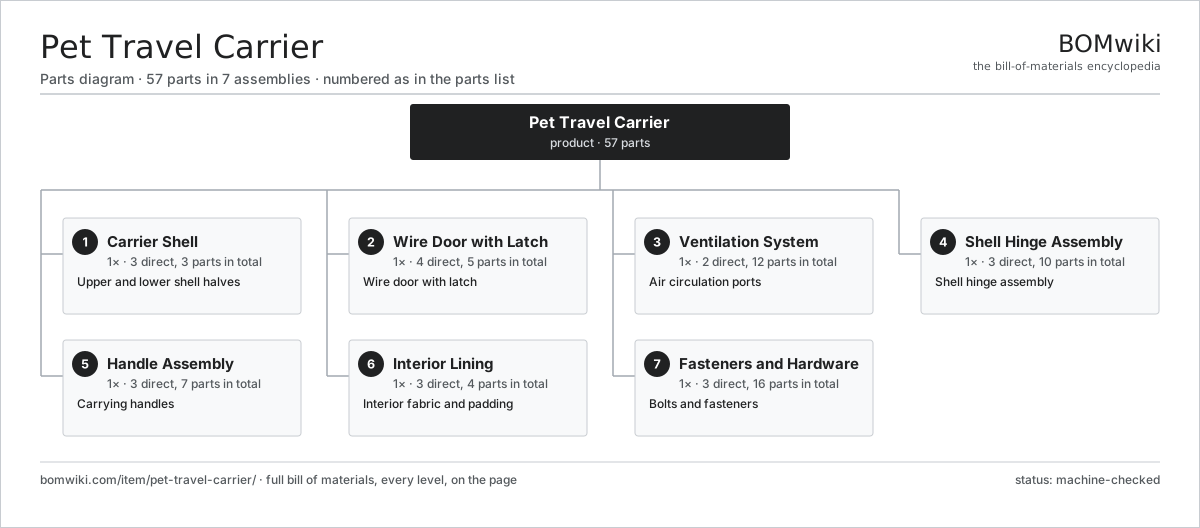
| # | Part | Qty | What it does |
|---|---|---|---|
| 1 | Carrier Shell 3 parts | 1× | Upper and lower shell halves |
| 2 | Wire Door with Latch 4 parts | 1× | Wire door with latch |
| 3 | Ventilation System 2 parts | 1× | Air circulation ports |
| 4 | Shell Hinge Assembly 3 parts | 1× | Shell hinge assembly |
| 5 | Handle Assembly 3 parts | 1× | Carrying handles |
| 6 | Interior Lining 3 parts | 1× | Interior fabric and padding |
| 7 | Fasteners and Hardware 3 parts | 1× | Bolts and fasteners |
3D model
No 3D model yet. Have a CAD file of this? Add a 3D model — STL renders right on this page; STEP, FreeCAD, and OpenSCAD sources are welcome too (openly licensed, like all 3D models on BOMwiki).
Build & assembly graph
expand / collapse · shared sub-assemblies converge · links to related products · est. labourTap an assembly to expand/collapse · tap a part to open it · use “Open page” for any node · drag to pan, scroll to zoom.
Bill of materials for Pet Travel Carrier
7 top-level lines · 28 rows shown · 57 parts total · indented to 3 levels| # | Item / sub-assembly | Part no. | Qty/assy | Ext. qty | Parts | Type |
|---|---|---|---|---|---|---|
| 1 | Carrier Shell 3 parts | pet-travel-carrier-housing | 1× | 1 | 3 | assembly |
| 1.1 | Upper Shell Half | pet-travel-carrier-upper-shell | 1× | 1 | · | part |
| 1.2 | Lower Shell Half | pet-travel-carrier-lower-shell | 1× | 1 | · | part |
| 1.3 | Door Frame Cutout | pet-travel-carrier-door-cutout | 1× | 1 | · | part |
| 2 | Wire Door with Latch 4 parts | pet-travel-carrier-door-system | 1× | 1 | 5 | assembly |
| 2.1 | Wire Door | pet-travel-carrier-wire-door-frame | 1× | 1 | · | part |
| 2.2 | Door Latch | pet-travel-carrier-door-latch | 1× | 1 | · | part |
| 2.3 | Door Hinge | pet-travel-carrier-door-hinge | 1× | 1 | · | part |
| 2.4 | Latch Bolt | pet-travel-carrier-latch-bolt | 2× | 2 | · | part |
| 3 | Ventilation System 2 parts | pet-travel-carrier-ventilation | 1× | 1 | 12 | assembly |
| 3.1 | Ventilation Port | pet-travel-carrier-vent-port | 8× | 8 | · | part |
| 3.2 | Mesh Screen | pet-travel-carrier-mesh-screen | 4× | 4 | · | part |
| 4 | Shell Hinge Assembly 3 parts | pet-travel-carrier-hinge-system | 1× | 1 | 10 | assembly |
| 4.1 | Shell Hinge | pet-travel-carrier-hinge | 2× | 2 | · | part |
| 4.2 | Hinge Pin | pet-travel-carrier-hinge-pin | 2× | 2 | · | part |
| 4.3 | Hinge Bolt | pet-travel-carrier-hinge-bolt | 6× | 6 | · | part |
| 5 | Handle Assembly 3 parts | pet-travel-carrier-handle-system | 1× | 1 | 7 | assembly |
| 5.1 | Top Handle | pet-travel-carrier-top-handle | 1× | 1 | · | part |
| 5.2 | Side Handle | pet-travel-carrier-side-handle | 2× | 2 | · | part |
| 5.3 | Handle Bracket | pet-travel-carrier-handle-bracket | 4× | 4 | · | part |
| 6 | Interior Lining 3 parts | pet-travel-carrier-lining | 1× | 1 | 4 | assembly |
| 6.1 | Fabric Pad | pet-travel-carrier-fabric-pad | 1× | 1 | · | part |
| 6.2 | Cushion Foam | pet-travel-carrier-cushion-foam | 1× | 1 | · | part |
| 6.3 | Mesh Panel | pet-travel-carrier-mesh-panel | 2× | 2 | · | part |
| 7 | Fasteners and Hardware 3 parts | pet-travel-carrier-hardware | 1× | 1 | 16 | assembly |
| 7.1 | Plastic Bolt | pet-travel-carrier-plastic-bolt | 8× | 8 | · | part |
| 7.2 | Clip | pet-travel-carrier-clip | 4× | 4 | · | part |
| 7.3 | Rubber Foot | pet-travel-carrier-rubber-foot | 4× | 4 | · | part |
Sourcing: possible vendors
Prices, MOQ, and lead times are algorithmic estimates, not quotes, and not claims about these companies. Company mappings are curated by keyword; est. price band $20–$2k. How estimates work| Vendor | HQ | Specialty | MOQ | Lead time |
|---|---|---|---|---|
|
🇺🇸Coleman
coleman.com ↗
|
Chicago, US | Camping gear | 1,000 units | 6–10 wks |
| thenorthface.com ↗ | Denver, US | Outdoor apparel & gear | 1,000 units | 6–10 wks |
|
🇺🇸YETI
yeti.com ↗
|
Austin, US | Coolers & drinkware | 1,000 units | 6–10 wks |
| decathlon.com ↗ | Villeneuve-d'Ascq, FR | Sporting goods | 1,000 units | 6–10 wks |
|
🇺🇸Garmin
garmin.com ↗
|
Olathe, US | GPS & wearables | 1,000 units | 6–10 wks |
1,481-word article