Textile Carding Machine
ProductOverview
Carding is the heart of the spinning preparation line. The blowroom delivers opened, cleaned cotton as a loose mat of small tufts, but those tufts are still clumps of tangled fibers with trash in them. The card turns that mat into a thin web of single, separated, roughly aligned fibers, removes the last of the short fiber and trash, and gathers the web into the first sliver. Spinners have a saying that the card is the heart of the mill, because the quality of everything downstream is limited by how well the card does its job: no later machine can put back the fiber the card breaks or recover the separation the card fails to achieve.
The action is simple in principle and demanding in practice. Two surfaces covered in fine wire teeth move past each other with a gap of a fraction of a millimetre. Fibers caught between them are combed apart. Holding that tiny gap constant across a wide fast-turning cylinder, over a machine that may run for years, is what makes a card a precision machine.
Feeding the mat
The fiber mat comes from the blowroom into a tall Feed & Lap Intake chute that packs it to an even density. A Feed Roller grips the mat against the feed plate and pushes it forward at a controlled rate. A Feed Weight Sensor measures the fed density and the control trims the feed speed to hold the delivered sliver weight constant, the first stage of the card's auto-levelling.
Opening at the licker-in
The held mat reaches the Licker-In Section, a fast roller wound with coarse Licker-In Saw-Tooth Wire saw-tooth wire. Its teeth pluck the mat into small tufts and begin opening it. Because it spins fast, heavy trash and seed bits are thrown outward by centrifugal force, where Mote Knife blades and the undercasing catch them and drop them to the waste. So the licker-in both opens the stock and does a first cleaning before the fiber reaches the main carding zone.
The main carding action
The licker-in hands the opened tufts up to the Main Cylinder & Flats. The Main Cylinder is large, balanced and wound with fine Cylinder Wire Clothing clothing, and it turns fast. Above it runs an endless belt of about a hundred Revolving Flat Bar flats, each also wire-clothed, crossing the top of the cylinder slowly. The gap between cylinder and flats is set by the Flexible Bend arcs to a fraction of a millimetre. In that gap the tufts are combed down to single fibers, laid in one direction, and freed of remaining neps and trash. The flats slowly carry off the dirt they collect and are cleaned by the Flat Stripping Comb before returning to work, so the flat strips they drop are part of the card's waste.
Stripping the web
The carded fibers ride round on the cylinder until they meet the Doffer & Web Take-Off. The Doffer Roller turns slowly with clothing set to grip fiber more strongly than the cylinder, so the fiber transfers across and condenses into a thin web. A stripping roller and the Doffer Comb lift the web off cleanly. The transfer is never complete in one pass: some fiber stays on the cylinder and goes round again, which is part of how the card blends.
Forming the sliver
The web that leaves the doffer is wide and very thin, so the Web Condensing & Coiler draws it together through a trumpet into the first round sliver, compacts it through calender rollers, and lays it into a can in even coils, the same end stage the draw frame uses. This card sliver is the input to drawing.
Suction, control and frame
Carding throws off a great deal of trash and dust, and the wire clothing loses its edge if fiber and dirt build up in it, so the Suction & Waste System system runs constantly, pulling waste from under the licker-in, off the flats and out of the carding zone to a filter drum. The Machine Control sets cylinder, doffer and feed speeds, runs the auto-leveller and logs sliver weight. The whole machine is built on heavy cast Machine Frame & Guards side frames, because the working gaps depend on the cylinder and doffer staying on exact centres, and mass is what keeps them there.
Materials and use
The cylinder and doffer are cast iron or nodular iron for stability, balanced so they run true at speed. The wire clothing is hardened steel, the single most important wear part, reground and eventually replaced as it dulls. The side frames are cast iron for stiffness. Every short-staple spinning mill runs a row of cards as the first machine after the blowroom, and because the card sets the ceiling on yarn quality, mills monitor its waste, its gap settings and the evenness of its sliver more closely than almost any other machine in the room.
Textile Carding Machine parts and their functions
10 top-level parts · 244 parts in total · full bill of materials below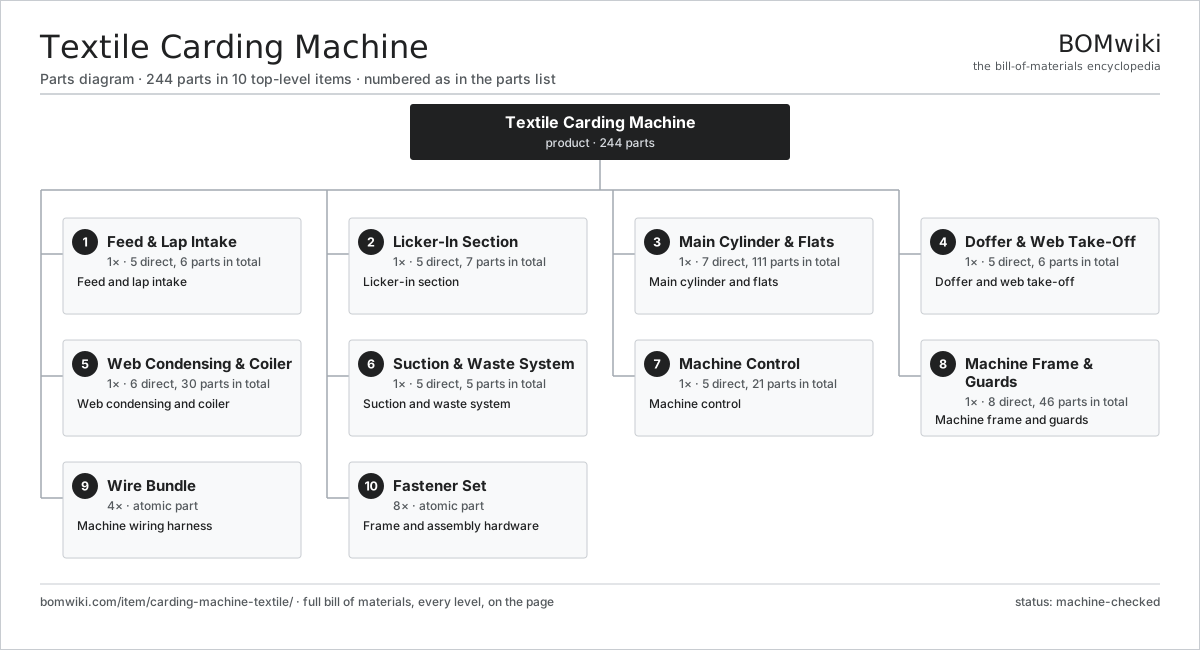
| # | Part | Qty | What it does |
|---|---|---|---|
| 1 | Feed & Lap Intake 5 parts | 1× | Feed and lap intake |
| 2 | Licker-In Section 5 parts | 1× | Licker-in section |
| 3 | Main Cylinder & Flats 7 parts | 1× | Main cylinder and flats |
| 4 | Doffer & Web Take-Off 5 parts | 1× | Doffer and web take-off |
| 5 | Web Condensing & Coiler 6 parts | 1× | Web condensing and coiler |
| 6 | Suction & Waste System 5 parts | 1× | Suction and waste system |
| 7 | Machine Control 5 parts | 1× | Machine control |
| 8 | Machine Frame & Guards 8 parts | 1× | Machine frame and guards |
| 9 | Wire Bundle | 4× | Machine wiring harness |
| 10 | Fastener Set | 8× | Frame and assembly hardware |
3D model
No 3D model yet. Have a CAD file of this? Add a 3D model. STL renders right on this page; STEP, FreeCAD, and OpenSCAD sources are welcome too (openly licensed, like all 3D models on BOMwiki).
Build & assembly graph
expand / collapse · shared sub-assemblies converge · links to related products · est. labourTap an assembly to expand/collapse · tap a part to open it · use “Open page” for any node · drag to pan, scroll to zoom.
Bill of materials for Textile Carding Machine
10 top-level lines · 67 rows shown · 244 parts total · indented to 3 levels| # | Item / sub-assembly | Part no. | Qty/assy | Ext. qty | Parts | Type |
|---|---|---|---|---|---|---|
| 1 | Feed & Lap Intake 5 parts | carding-machine-textile-feed | 1× | 1 | 6 | assembly |
| 1.1 | Feed Plate | carding-machine-textile-feed-plate | 1× | 1 | · | part |
| 1.2 | Feed Roller | carding-machine-textile-feed-roller | 1× | 1 | · | part |
| 1.3 | Feed Chute | carding-machine-textile-chute | 1× | 1 | · | part |
| 1.4 | Feed Weight Sensor | carding-machine-textile-weight-sensor | 1× | 1 | · | part |
| 1.5 | Ball Bearing | ball-bearing | 2× | 2 | · | part |
| 2 | Licker-In Section 5 parts | carding-machine-textile-licker-in | 1× | 1 | 7 | assembly |
| 2.1 | Licker-In Roller | carding-machine-textile-licker-roller | 1× | 1 | · | part |
| 2.2 | Licker-In Saw-Tooth Wire | carding-machine-textile-licker-wire | 1× | 1 | · | part |
| 2.3 | Mote Knife | carding-machine-textile-mote-knife | 2× | 2 | · | part |
| 2.4 | Undercasing | carding-machine-textile-undercasing | 1× | 1 | · | part |
| 2.5 | Ball Bearing | ball-bearing | 2× | 2 | · | part |
| 3 | Main Cylinder & Flats 7 parts | carding-machine-textile-cylinder | 1× | 1 | 111 | assembly |
| 3.1 | Main Cylinder | carding-machine-textile-main-cylinder | 1× | 1 | · | part |
| 3.2 | Cylinder Wire Clothing | carding-machine-textile-cylinder-wire | 1× | 1 | · | part |
| 3.3 | Revolving Flat Bar | carding-machine-textile-flat-bar | 100× | 100 | · | part |
| 3.4 | Flat Drive Chain | carding-machine-textile-flat-chain | 2× | 2 | · | part |
| 3.5 | Flat Stripping Comb | carding-machine-textile-flat-stripper | 1× | 1 | · | part |
| 3.6 | Flexible Bend | carding-machine-textile-flexible-bend | 2× | 2 | · | part |
| 3.7 | Ball Bearing | ball-bearing | 4× | 4 | · | part |
| 4 | Doffer & Web Take-Off 5 parts | carding-machine-textile-doffer | 1× | 1 | 6 | assembly |
| 4.1 | Doffer Roller | carding-machine-textile-doffer-roller | 1× | 1 | · | part |
| 4.2 | Doffer Wire Clothing | carding-machine-textile-doffer-wire | 1× | 1 | · | part |
| 4.3 | Web Stripping Roller | carding-machine-textile-stripping-roller | 1× | 1 | · | part |
| 4.4 | Doffer Comb | carding-machine-textile-doffer-comb | 1× | 1 | · | part |
| 4.5 | Ball Bearing | ball-bearing | 2× | 2 | · | part |
| 5 | Web Condensing & Coiler 6 parts | carding-machine-textile-coiler | 1× | 1 | 30 | assembly |
| 5.1 | Web Condensing Trumpet | carding-machine-textile-web-trumpet | 1× | 1 | · | part |
| 5.2 | Calender Roller | carding-machine-textile-calender-roller | 2× | 2 | · | part |
| 5.3 | Coiler Tube | carding-machine-textile-coiler-tube | 1× | 1 | · | part |
| 5.4 | Coiler Plate | carding-machine-textile-coiler-plate | 1× | 1 | · | part |
| 5.5 | Can Turntable | carding-machine-textile-can-turntable | 1× | 1 | · | part |
| 5.6 | Servo Motor 4 parts | servo-motor | 1× | 1 | 24 | assembly |
| 5.6.1 | Stator Assembly 3 parts + deeper › | stator-assembly | 1× | 1 | 3 | assembly |
| 5.6.2 | Rotor Assembly 4 parts + deeper › | rotor-assembly | 1× | 1 | 19 | assembly |
| 5.6.3 | Encoder | encoder | 1× | 1 | · | part |
| 5.6.4 | Motor Housing | motor-housing | 1× | 1 | · | part |
| 6 | Suction & Waste System 5 parts | carding-machine-textile-suction | 1× | 1 | 5 | assembly |
| 6.1 | Suction Fan | carding-machine-textile-suction-fan | 1× | 1 | · | part |
| 6.2 | Flat Waste Duct | carding-machine-textile-flat-waste-duct | 1× | 1 | · | part |
| 6.3 | Licker-In Waste Duct | carding-machine-textile-licker-waste-duct | 1× | 1 | · | part |
| 6.4 | Filter Drum | carding-machine-textile-filter-drum | 1× | 1 | · | part |
| 6.5 | Waste Collection Box | carding-machine-textile-waste-box | 1× | 1 | · | part |
| 7 | Machine Control 5 parts | carding-machine-textile-control | 1× | 1 | 21 | assembly |
| 7.1 | Main Controller 4 parts | carding-machine-textile-controller | 1× | 1 | 7 | assembly |
| 7.1.1 | Bare PCB | pcb-bare | 1× | 1 | · | part |
| 7.1.2 | Microcontroller | mcu | 1× | 1 | · | part |
| 7.1.3 | SMD Passive (R/C/L) | smd-passives | 1× | 1 | · | part |
| 7.1.4 | Connector | connector | 4× | 4 | · | part |
| 7.2 | LCD Panel | lcd-panel | 1× | 1 | · | part |
| 7.3 | Power Supply | power-supply | 1× | 1 | · | part |
| 7.4 | Relay | relay | 4× | 4 | · | part |
| 7.5 | Connector | connector | 8× | 8 | · | part |
| 8 | Machine Frame & Guards 8 parts | carding-machine-textile-frame | 1× | 1 | 46 | assembly |
| 8.1 | Cast Side Frame | carding-machine-textile-side-frame | 2× | 2 | · | part |
| 8.2 | Cylinder Shaft | carding-machine-textile-cylinder-shaft | 1× | 1 | · | part |
| 8.3 | Main Drive Motor 3 parts | carding-machine-textile-main-motor | 1× | 1 | 24 | assembly |
| 8.3.1 | Stator Assembly 3 parts + deeper › | stator-assembly | 1× | 1 | 3 | assembly |
| 8.3.2 | Rotor Assembly 4 parts + deeper › | rotor-assembly | 1× | 1 | 19 | assembly |
| 8.3.3 | Ball Bearing | ball-bearing | 2× | 2 | · | part |
| 8.4 | Working Zone Guard | carding-machine-textile-guard | 6× | 6 | · | part |
| 8.5 | Gearbox Housing | gearbox-housing | 1× | 1 | · | part |
| 8.6 | Helical Gear Pair | gear-pair | 4× | 4 | · | part |
| 8.7 | Sheet Metal Panel | sheet-panel | 6× | 6 | · | part |
| 8.8 | Drive Belt | drive-belt | 2× | 2 | · | part |
| 9 | Wire Bundle | wire-bundle | 4× | 4 | · | part |
| 10 | Fastener Set | fastener-set | 8× | 8 | · | part |
Related products
same domain, ranked by shared parts Automatic Fabric Cutting Machine
1,695 parts · shares 5 with this page
Automatic Winding Machine
288 parts · shares 5 with this page
Fabric Coating Machine
316 parts · shares 5 with this page
FDY Filament Spinning Line
679 parts · shares 5 with this page
Automatic Fabric Cutting Machine
1,695 parts · shares 5 with this page
Automatic Winding Machine
288 parts · shares 5 with this page
Fabric Coating Machine
316 parts · shares 5 with this page
FDY Filament Spinning Line
679 parts · shares 5 with this page
 Industrial Quilting Machine
1,090 parts · shares 5 with this page
Industrial Quilting Machine
1,090 parts · shares 5 with this page
Sourcing: possible vendors
Browse the supplier directory → Prices, MOQ, and lead times are algorithmic estimates, not quotes, and not claims about these companies. Company mappings are curated by keyword; est. price band $10k–$1M. How estimates work| Vendor | HQ | Specialty | MOQ | Lead time |
|---|---|---|---|---|
|
🇨🇭Rieter
rieter.com ↗
|
Winterthur, CH | Spinning machinery | 10 units | 14–24 wks |
| truetzschler.com ↗ | Mönchengladbach, DE | Textile machinery | 10 units | 14–24 wks |
|
🇧🇪Picanol
picanol.be ↗
|
Ypres, BE | Weaving machines | 10 units | 14–24 wks |
| karlmayer.com ↗ | Obertshausen, DE | Warp knitting machines | 10 units | 14–24 wks |
|
🇨🇭Saurer
saurer.com ↗
|
Arbon, CH | Spinning & embroidery | 10 units | 14–24 wks |
865-word article