Racing Dinghy
ProductOverview
A racing dinghy is a small, light, unballasted sailboat built for speed and raced by a crew of one or two. With no fixed keel and no heavy ballast, the boat depends on the crew's weight, hung out over the side, to stay upright as the wind heels it. That makes it fast and responsive but demanding: when the wind drops the crew slide in, and when a gust hits they move out, all while trimming sails and steering. A typical two-person performance dinghy is around 4.2 m long and weighs under 80 kg rigged, light enough to plane on top of the water and to capsize and be righted by the crew.
The boat divides into the hull and its foils, the rig and sails, the lines and purchases that shape the rig, and the crew gear. The Hull is the platform, the Foil Set grips the water and steers, the Rig and Sail Set convert wind into drive, and the Running Rigging and Control Systems let the crew tune the sails moment to moment. The Cockpit Fitout supports hiking and trapezing, and the Buoyancy tanks make the boat self-rescuing after a capsize.
Hull and foils
The Hull is a planing shape: flat enough aft that once the boat reaches speed it climbs onto its own bow wave and skims the surface instead of pushing through it. The Hull Shell and bonded Deck Molding are laminated GRP, kept light and stiff by foam Hull Stiffener ribs, with side tanks and a raised Cockpit Floor that drains itself. The Transom carries the rudder fittings and the bailers.
The Foil Set does two jobs. The Centreboard is a foil that drops through a watertight Centreboard Case in the hull; it resists the sideways push of the sails so the boat goes forward instead of slipping sideways, and it pivots up in shallow water and downwind. Steering is by the Rudder Blade, hung off the transom on a Rudder Stock and turned by a Tiller. Because the helm sits out on the side deck to balance the boat, a Tiller Extension hiking stick reaches the tiller from there.
Rig and sails
The Rig holds the sails up and shapes them. A tapered Mast carries the mainsail and is held up by a Forestay forward and two Shroud wires to the sides, spread by Spreader struts that control how the mast bends under load. The mast foot locates in a Mast Step, and the Boom swings off the mast to tension the foot of the mainsail. The amount the mast bends changes the depth of the mainsail, which is one of the main ways the crew matches the rig to the wind strength.
The Sail Set is three sails. The Mainsail is the engine, set on the mast and boom and stiffened by Sail Batten battens that hold its curved trailing edge. The Jib sets on the forestay ahead of the mast and speeds the airflow over the main. For downwind legs the crew hoists the large, light Spinnaker, which fills out ahead of the boat and adds a big jump in power and speed. Trimming all three correctly across a course is most of what dinghy racing is about.
Running rigging and controls
The Running Rigging is the set of lines that hoist and trim the sails. A Main Halyard and Jib Halyard raise the sails; a Mainsheet, a pair of Jib Sheet sheets, and Spinnaker Sheet sheets control their angle to the wind. Every line runs through Block blocks that redirect it and multiply the pull, and locks in a Cam Cleat so the crew can hold a setting without holding the rope.
Beyond simple trim, the Control Systems let the crew bend the rig and reshape the sails on the fly. The Kicker (Vang) pulls the boom down to flatten and depower the main in a gust; the Cunningham tensions the luff to move the draft forward; the Outhaul tensions the foot; and the Traveller sets where the mainsheet pulls from. These are arranged as multi-part purchases through more Block blocks and Cam Cleat cleats so they can be adjusted hard, fast, and from the hiking position.
Crew gear and buoyancy
A dinghy stays upright on crew weight, so the Cockpit Fitout is built around getting that weight outboard. The crew hook their feet under Toe Strap straps and lean out over the side, a posture called hiking. The forward crew goes further, clipping a Trapeze Harness onto a Trapeze Wire from the mast and standing on the gunwale with their body horizontal over the water, which moves far more righting weight outboard than hiking alone. A Self Bailer self-bailer in the floor drains water out through a venturi while the boat planes.
Because an unballasted dinghy will capsize, the Buoyancy system makes that survivable. Sealed Buoyancy Tank tanks built into the hull and side decks float a swamped boat high enough that the crew can climb on the centreboard, lever it upright and sail on. Each tank has an Inspection Hatch for access and a Tank Bung to drain any water that gets in. Racing dinghies are sailed in fleets to a one-design rule, on inland lakes, harbours and open coastal courses, and form the training path into keelboat and Olympic sailing.
Racing Dinghy parts and their functions
8 top-level parts · 82 parts in total · full bill of materials below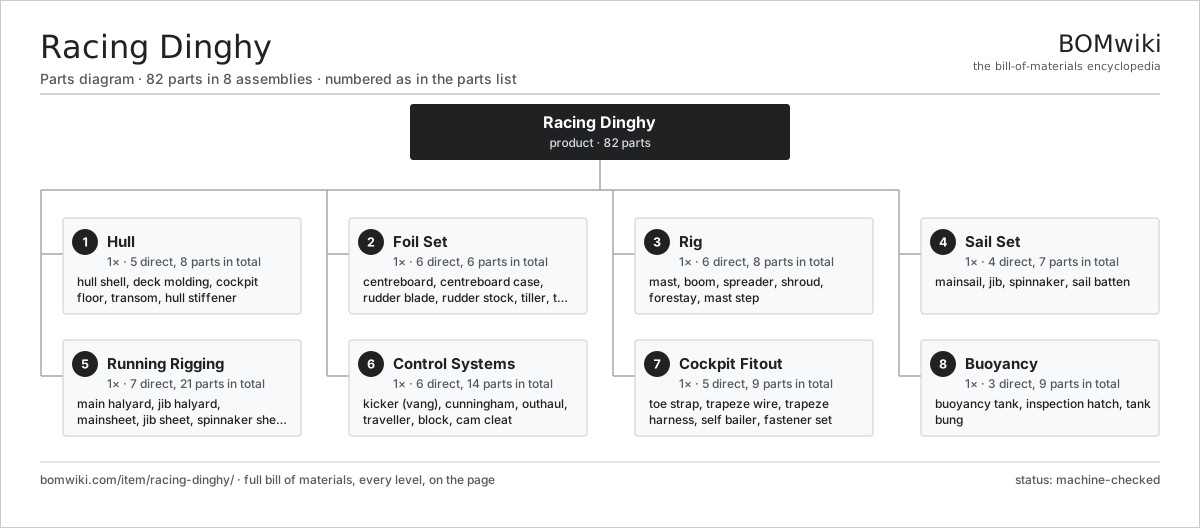
| # | Part | Qty | What it does |
|---|---|---|---|
| 1 | Hull 5 parts | 1× | Planing GRP hull with self-draining cockpit. |
| 2 | Foil Set 6 parts | 1× | Centreboard and rudder blade providing lateral grip and steering. |
| 3 | Rig 6 parts | 1× | Mast, boom and standing rigging. |
| 4 | Sail Set 4 parts | 1× | Mainsail, jib and spinnaker. |
| 5 | Running Rigging 7 parts | 1× | Halyards and sheets controlling sail set. |
| 6 | Control Systems 6 parts | 1× | Purchase systems shaping the rig. |
| 7 | Cockpit Fitout 5 parts | 1× | Hiking gear and toe straps for crew positioning. |
| 8 | Buoyancy 3 parts | 1× | Sealed tanks and inspection hatches. |
3D model
No 3D model yet. Have a CAD file of this? Add a 3D model — STL renders right on this page; STEP, FreeCAD, and OpenSCAD sources are welcome too (openly licensed, like all 3D models on BOMwiki).
Build & assembly graph
expand / collapse · shared sub-assemblies converge · links to related products · est. labourTap an assembly to expand/collapse · tap a part to open it · use “Open page” for any node · drag to pan, scroll to zoom.
Bill of materials for Racing Dinghy
8 top-level lines · 50 rows shown · 82 parts total · indented to 3 levels| # | Item / sub-assembly | Part no. | Qty/assy | Ext. qty | Parts | Type |
|---|---|---|---|---|---|---|
| 1 | Hull 5 parts | racing-dinghy-hull | 1× | 1 | 8 | assembly |
| 1.1 | Hull Shell | racing-dinghy-hull-shell | 1× | 1 | · | part |
| 1.2 | Deck Molding | racing-dinghy-deck-molding | 1× | 1 | · | part |
| 1.3 | Cockpit Floor | racing-dinghy-cockpit-floor | 1× | 1 | · | part |
| 1.4 | Transom | racing-dinghy-transom | 1× | 1 | · | part |
| 1.5 | Hull Stiffener | racing-dinghy-hull-stiffener | 4× | 4 | · | part |
| 2 | Foil Set 6 parts | racing-dinghy-foil-set | 1× | 1 | 6 | assembly |
| 2.1 | Centreboard | racing-dinghy-centreboard | 1× | 1 | · | part |
| 2.2 | Centreboard Case | racing-dinghy-centreboard-case | 1× | 1 | · | part |
| 2.3 | Rudder Blade | racing-dinghy-rudder-blade | 1× | 1 | · | part |
| 2.4 | Rudder Stock | racing-dinghy-rudder-stock | 1× | 1 | · | part |
| 2.5 | Tiller | racing-dinghy-tiller | 1× | 1 | · | part |
| 2.6 | Tiller Extension | racing-dinghy-tiller-extension | 1× | 1 | · | part |
| 3 | Rig 6 parts | racing-dinghy-rig | 1× | 1 | 8 | assembly |
| 3.1 | Mast | racing-dinghy-mast | 1× | 1 | · | part |
| 3.2 | Boom | racing-dinghy-boom | 1× | 1 | · | part |
| 3.3 | Spreader | racing-dinghy-spreader | 2× | 2 | · | part |
| 3.4 | Shroud | racing-dinghy-shroud | 2× | 2 | · | part |
| 3.5 | Forestay | racing-dinghy-forestay | 1× | 1 | · | part |
| 3.6 | Mast Step | racing-dinghy-mast-step | 1× | 1 | · | part |
| 4 | Sail Set 4 parts | racing-dinghy-sail-set | 1× | 1 | 7 | assembly |
| 4.1 | Mainsail | racing-dinghy-mainsail | 1× | 1 | · | part |
| 4.2 | Jib | racing-dinghy-jib | 1× | 1 | · | part |
| 4.3 | Spinnaker | racing-dinghy-spinnaker | 1× | 1 | · | part |
| 4.4 | Sail Batten | racing-dinghy-batten | 4× | 4 | · | part |
| 5 | Running Rigging 7 parts | racing-dinghy-running-rigging | 1× | 1 | 21 | assembly |
| 5.1 | Main Halyard | racing-dinghy-main-halyard | 1× | 1 | · | part |
| 5.2 | Jib Halyard | racing-dinghy-jib-halyard | 1× | 1 | · | part |
| 5.3 | Mainsheet | racing-dinghy-mainsheet | 1× | 1 | · | part |
| 5.4 | Jib Sheet | racing-dinghy-jib-sheet | 2× | 2 | · | part |
| 5.5 | Spinnaker Sheet | racing-dinghy-spinnaker-sheet | 2× | 2 | · | part |
| 5.6 | Block | racing-dinghy-block | 8× | 8 | · | part |
| 5.7 | Cam Cleat | racing-dinghy-cam-cleat | 6× | 6 | · | part |
| 6 | Control Systems 6 parts | racing-dinghy-control-systems | 1× | 1 | 14 | assembly |
| 6.1 | Kicker (Vang) | racing-dinghy-kicker | 1× | 1 | · | part |
| 6.2 | Cunningham | racing-dinghy-cunningham | 1× | 1 | · | part |
| 6.3 | Outhaul | racing-dinghy-outhaul | 1× | 1 | · | part |
| 6.4 | Traveller | racing-dinghy-traveller | 1× | 1 | · | part |
| 6.5 | Block | racing-dinghy-block | 6× | 6 | · | part |
| 6.6 | Cam Cleat | racing-dinghy-cam-cleat | 4× | 4 | · | part |
| 7 | Cockpit Fitout 5 parts | racing-dinghy-cockpit-fitout | 1× | 1 | 9 | assembly |
| 7.1 | Toe Strap | racing-dinghy-toe-strap | 2× | 2 | · | part |
| 7.2 | Trapeze Wire | racing-dinghy-trapeze-wire | 2× | 2 | · | part |
| 7.3 | Trapeze Harness | racing-dinghy-trapeze-harness | 2× | 2 | · | part |
| 7.4 | Self Bailer | racing-dinghy-bailer | 2× | 2 | · | part |
| 7.5 | Fastener Set | fastener-set | 1× | 1 | · | part |
| 8 | Buoyancy 3 parts | racing-dinghy-buoyancy | 1× | 1 | 9 | assembly |
| 8.1 | Buoyancy Tank | racing-dinghy-buoyancy-tank | 3× | 3 | · | part |
| 8.2 | Inspection Hatch | racing-dinghy-inspection-hatch | 3× | 3 | · | part |
| 8.3 | Tank Bung | racing-dinghy-tank-bung | 3× | 3 | · | part |
Sourcing: possible vendors
Prices, MOQ, and lead times are algorithmic estimates, not quotes, and not claims about these companies. Company mappings are curated by keyword; est. price band $2k–$500M. How estimates work| Vendor | HQ | Specialty | MOQ | Lead time |
|---|---|---|---|---|
| hd.com ↗ | Ulsan, KR | Shipbuilder | made to order | 52–104 wks |
| fincantieri.com ↗ | Trieste, IT | Shipbuilder | made to order | 52–104 wks |
| damen.com ↗ | Gorinchem, NL | Shipbuilder | made to order | 52–104 wks |
| brunswick.com ↗ | Mettawa, US | Marine & boats | made to order | 52–104 wks |
|
🇨🇳CSSC
cssc.net.cn ↗
|
Shanghai, CN | Shipbuilding conglomerate | made to order | 52–104 wks |
1,002-word article