Vibratory Finishing Machine
ProductOverview
A vibratory finishing machine is a batch mass-finishing tool that deburrs, radiuses, descales, smooths and polishes parts in bulk. Parts are loaded into a Toroidal Process Bowl together with abrasive or polishing media, water and a chemical compound. A vibrating drive shakes the whole charge so that media and parts rub against each other thousands of times a minute. The rubbing is what does the work: each pass takes off a little metal at every edge and high spot.
The machine described here is the toroidal, or donut, type. The bowl is a closed channel bent into a ring, and the drive sits on the bowl axis in the middle. This layout makes the charge roll in a continuous helical path around the ring, which mixes parts and media evenly and lets the operator unload the finished batch over a screen without stopping to scoop it out. Toroidal bowls are the workhorse of the mass-finishing world, used for everything from cast fittings and stampings to machined aerospace parts.
How it works
The motion comes from the Vibratory Drive. A vertical-shaft motor carries an eccentric weight at the top and another at the bottom. When the shaft spins, the weights throw the bowl in a tight orbit many times a second. The size of the weights sets the force and so the Polyurethane Lining and charge see an amplitude of a few millimetres at about 1500 rpm.
The clever part is the angle between the top and bottom weights. Because the drive is mounted at the bowl center, the top weight tips the bowl one way and the bottom weight tips it the other, so the orbit is not flat but corkscrews. That corkscrew gives the charge a forward push every cycle, and the charge climbs the outer wall, rolls over and walks around the ring in a slow helix while it vibrates. Operators tune the lead angle to trade off speed of turnover against gentleness. A small twist on the Bottom Eccentric Weight is enough to change how fast a batch circulates.
The energy has to stay in the bowl, not go into the floor. The vibrating bowl floats on a ring of Coil Spring isolators that sit on a static Base Frame. The springs carry the dead weight of the bowl and charge but are soft enough at running frequency that almost no vibration reaches the ground. Heavy-duty Ball Bearing sets inside the motor take the rotating unbalance that would destroy an ordinary motor in days.
Media and compounds
Media is chosen for the job, not just thrown in. Ceramic media cuts hard steel and removes the most stock; plastic media is gentler and used on softer alloys and where burnishing matters more than cutting; steel media (shot, pins, balls) does no cutting at all and is used dry or with a brightener to burnish parts to a mirror. Media comes in cones, triangles, wedges and angle-cut cylinders so it can reach into corners, slots and bores. As media wears it shrinks; the worn fines have to leave the system, which is what the Drain + Filtration is for.
Compound is the liquid chemistry dosed with the water. The Water + Compound Dosing System meters water at 0.5-3 L/min and a few millilitres a minute of compound through a peristaltic Peristaltic Compound Pump. The water flushes loose swarf and worn media out of the cut so it does not just recirculate as polishing slurry, cools the charge, and carries the chemistry: cleaners and degreasers, descalers, inhibitors that stop fresh steel flash-rusting, or burnishing brighteners for the final shine.
Subsystems
Beyond the bowl, drive and suspension, a complete machine has a few more parts. The Media/Part Separation Unit is a vibrating screen deck at the outlet. At cycle end a flap opens, the charge climbs out of the bowl onto the deck, parts ride over the screen to a chute and the smaller media drops through and is returned to the bowl, so the operator never sorts parts from media by hand. The Sound Lid is an acoustic lid that drops the noise of clattering media by 10-15 dBA and keeps the wet spray inside. The Control System runs the recipe with a VFD that sets frequency and amplitude, a timer that ends the cycle and an HMI built around an LCD Panel that stores one recipe per part-and-media combination.
Variants
Toroidal bowls are the general-purpose machine. Tub vibrators, a straight trough instead of a ring, handle long or fragile parts that must not tumble into each other. Round-bowl machines without a separator are the cheapest and are emptied by hand. At the high-precision end, vibratory machines give way to centrifugal disc and drag finishers, which spin the media far harder for fast, fine finishes on small parts. The dosing, drain and control subsystems are broadly the same across all of these; the difference is the shape of the chamber and how hard the media is driven.
Use and failures
In use the operator picks a recipe, loads parts, closes the lid and starts the cycle. The machine doses water and compound, vibrates for the set time, then opens the discharge flap and runs the separator. Cycle times run from 15 minutes for light deburring to a few hours for fine polishing.
Wear is concentrated in a few places. The Polyurethane Lining is the main consumable: it abrades from the inside out and is recast or replaced when the steel shell starts to show. The peristaltic pump hose, the separation screen and the filter bag are all routine swap items. The motor bearings are the failure that stops the machine, because they live under a constant rotating load, and they are replaced on hours rather than on failure. Worn coil springs sag and let the bowl bottom out, which is heard as a change in pitch and felt in the floor.
Installation
The machine is heavy and self-contained. It needs a level floor able to take the static weight, a three-phase supply for the drive, a mains water feed for dosing and a drain or closed-loop tank for the spent process water. The Base Frame is leveled on its adjustable feet so the suspension springs load evenly; an out-of-level base makes the bowl circulate unevenly and wears one side of the lining faster. Because the suspension already isolates the vibration, no special foundation or holding-down bolts are needed, which is one reason these machines are easy to move and rearrange on a shop floor.
Vibratory Finishing Machine parts and their functions
9 top-level parts · 215 parts in total · full bill of materials below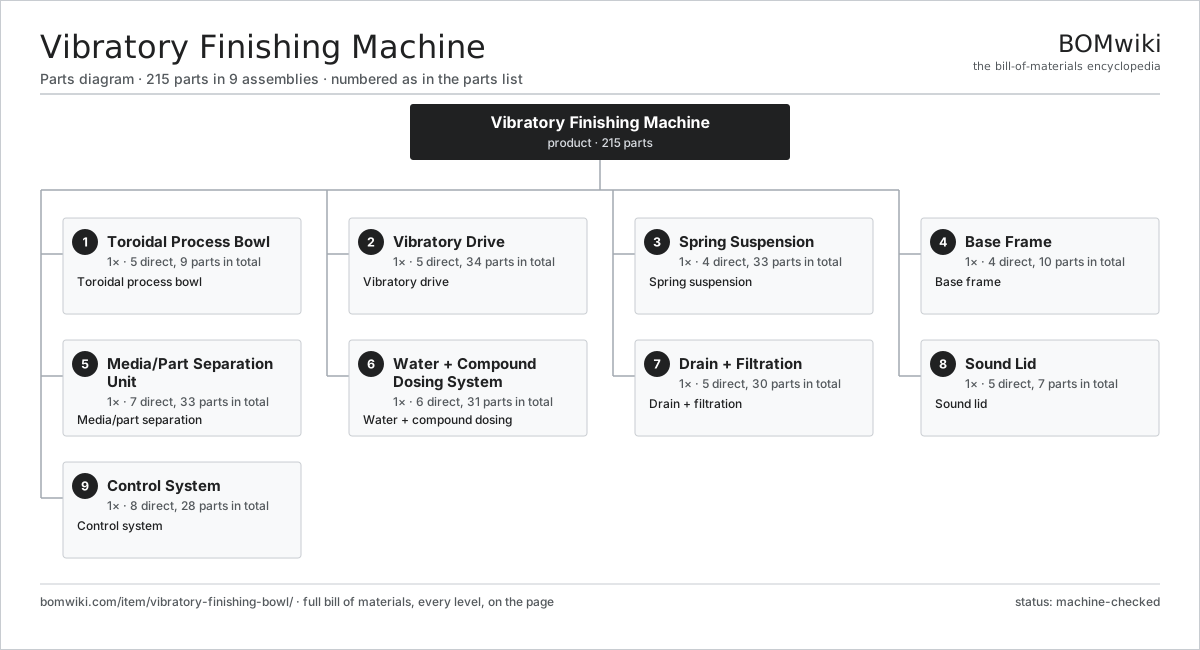
| # | Part | Qty | What it does |
|---|---|---|---|
| 1 | Toroidal Process Bowl 5 parts | 1× | Toroidal process bowl |
| 2 | Vibratory Drive 5 parts | 1× | Vibratory drive |
| 3 | Spring Suspension 4 parts | 1× | Spring suspension |
| 4 | Base Frame 4 parts | 1× | Base frame |
| 5 | Media/Part Separation Unit 7 parts | 1× | Media/part separation |
| 6 | Water + Compound Dosing System 6 parts | 1× | Water + compound dosing |
| 7 | Drain + Filtration 5 parts | 1× | Drain + filtration |
| 8 | Sound Lid 5 parts | 1× | Sound lid |
| 9 | Control System 8 parts | 1× | Control system |
3D model
No 3D model yet. Have a CAD file of this? Add a 3D model — STL renders right on this page; STEP, FreeCAD, and OpenSCAD sources are welcome too (openly licensed, like all 3D models on BOMwiki).
Build & assembly graph
expand / collapse · shared sub-assemblies converge · links to related products · est. labourTap an assembly to expand/collapse · tap a part to open it · use “Open page” for any node · drag to pan, scroll to zoom.
Bill of materials for Vibratory Finishing Machine
9 top-level lines · 83 rows shown · 215 parts total · indented to 3 levels| # | Item / sub-assembly | Part no. | Qty/assy | Ext. qty | Parts | Type |
|---|---|---|---|---|---|---|
| 1 | Toroidal Process Bowl 5 parts | vibratory-finishing-bowl-process-bowl | 1× | 1 | 9 | assembly |
| 1.1 | Bowl Shell | vibratory-finishing-bowl-bowl-shell | 1× | 1 | · | part |
| 1.2 | Polyurethane Lining | vibratory-finishing-bowl-pu-lining | 1× | 1 | · | part |
| 1.3 | Center Hub | vibratory-finishing-bowl-center-hub | 1× | 1 | · | part |
| 1.4 | Spider Arm | vibratory-finishing-bowl-spider-arm | 4× | 4 | · | part |
| 1.5 | Fastener Set | fastener-set | 2× | 2 | · | part |
| 2 | Vibratory Drive 5 parts | vibratory-finishing-bowl-drive | 1× | 1 | 34 | assembly |
| 2.1 | Vibratory Motor 7 parts | vibratory-finishing-bowl-motor | 1× | 1 | 29 | assembly |
| 2.1.1 | Stator Assembly 3 parts + deeper › | stator-assembly | 1× | 1 | 3 | assembly |
| 2.1.2 | Rotor Assembly 4 parts + deeper › | rotor-assembly | 1× | 1 | 19 | assembly |
| 2.1.3 | Motor Shaft | vibratory-finishing-bowl-motor-shaft | 1× | 1 | · | part |
| 2.1.4 | Ball Bearing | ball-bearing | 2× | 2 | · | part |
| 2.1.5 | Motor Housing | vibratory-finishing-bowl-motor-housing | 1× | 1 | · | part |
| 2.1.6 | Oil Seal | oil-seal | 2× | 2 | · | part |
| 2.1.7 | Terminal Box | vibratory-finishing-bowl-terminal-box | 1× | 1 | · | part |
| 2.2 | Top Eccentric Weight | vibratory-finishing-bowl-top-weight | 1× | 1 | · | part |
| 2.3 | Bottom Eccentric Weight | vibratory-finishing-bowl-bottom-weight | 1× | 1 | · | part |
| 2.4 | Weight Lock Collar | vibratory-finishing-bowl-weight-lock | 2× | 2 | · | part |
| 2.5 | Motor Mount Plate | vibratory-finishing-bowl-motor-mount | 1× | 1 | · | part |
| 3 | Spring Suspension 4 parts | vibratory-finishing-bowl-suspension | 1× | 1 | 33 | assembly |
| 3.1 | Coil Spring | coil-spring | 8× | 8 | · | part |
| 3.2 | Spring Locating Cup | vibratory-finishing-bowl-spring-cup | 16× | 16 | · | part |
| 3.3 | Spring Center Stud | vibratory-finishing-bowl-spring-stud | 8× | 8 | · | part |
| 3.4 | Fastener Set | fastener-set | 1× | 1 | · | part |
| 4 | Base Frame 4 parts | vibratory-finishing-bowl-base-frame | 1× | 1 | 10 | assembly |
| 4.1 | Base Weldment | vibratory-finishing-bowl-base-weldment | 1× | 1 | · | part |
| 4.2 | Leveling Foot | vibratory-finishing-bowl-leveling-foot | 4× | 4 | · | part |
| 4.3 | Sheet Metal Panel | sheet-panel | 3× | 3 | · | part |
| 4.4 | Fastener Set | fastener-set | 2× | 2 | · | part |
| 5 | Media/Part Separation Unit 7 parts | vibratory-finishing-bowl-separator | 1× | 1 | 33 | assembly |
| 5.1 | Screen Deck Frame | vibratory-finishing-bowl-screen-deck | 1× | 1 | · | part |
| 5.2 | Separation Screen | vibratory-finishing-bowl-separation-screen | 1× | 1 | · | part |
| 5.3 | Discharge Flap | vibratory-finishing-bowl-discharge-flap | 1× | 1 | · | part |
| 5.4 | Discharge Chute | vibratory-finishing-bowl-discharge-chute | 1× | 1 | · | part |
| 5.5 | Deck Vibrator 3 parts | vibratory-finishing-bowl-deck-motor | 1× | 1 | 24 | assembly |
| 5.5.1 | Stator Assembly 3 parts + deeper › | stator-assembly | 1× | 1 | 3 | assembly |
| 5.5.2 | Rotor Assembly 4 parts + deeper › | rotor-assembly | 1× | 1 | 19 | assembly |
| 5.5.3 | Ball Bearing | ball-bearing | 2× | 2 | · | part |
| 5.6 | Coil Spring | coil-spring | 4× | 4 | · | part |
| 5.7 | Fastener Set | fastener-set | 1× | 1 | · | part |
| 6 | Water + Compound Dosing System 6 parts | vibratory-finishing-bowl-compound-system | 1× | 1 | 31 | assembly |
| 6.1 | Water Dosing Valve | vibratory-finishing-bowl-water-valve | 1× | 1 | · | part |
| 6.2 | Flow Meter | vibratory-finishing-bowl-flow-meter | 1× | 1 | · | part |
| 6.3 | Peristaltic Compound Pump 3 parts | vibratory-finishing-bowl-compound-pump | 1× | 1 | 26 | assembly |
| 6.3.1 | Servo Motor 4 parts + deeper › | servo-motor | 1× | 1 | 24 | assembly |
| 6.3.2 | Pump Roller Rotor | vibratory-finishing-bowl-pump-rotor | 1× | 1 | · | part |
| 6.3.3 | Pump Squeeze Hose | vibratory-finishing-bowl-pump-hose | 1× | 1 | · | part |
| 6.4 | Compound Tank | vibratory-finishing-bowl-compound-tank | 1× | 1 | · | part |
| 6.5 | Spray Bar | vibratory-finishing-bowl-spray-bar | 1× | 1 | · | part |
| 6.6 | O-Ring Set | oring-set | 1× | 1 | · | part |
| 7 | Drain + Filtration 5 parts | vibratory-finishing-bowl-drain-filter | 1× | 1 | 30 | assembly |
| 7.1 | Bowl Drain Port | vibratory-finishing-bowl-drain-port | 1× | 1 | · | part |
| 7.2 | Settling Tank | vibratory-finishing-bowl-settling-tank | 1× | 1 | · | part |
| 7.3 | Bag Filter | vibratory-finishing-bowl-bag-filter | 1× | 1 | · | part |
| 7.4 | Recirculation Pump 3 parts | vibratory-finishing-bowl-recirc-pump | 1× | 1 | 26 | assembly |
| 7.4.1 | Servo Motor 4 parts + deeper › | servo-motor | 1× | 1 | 24 | assembly |
| 7.4.2 | Pump Impeller | vibratory-finishing-bowl-pump-impeller | 1× | 1 | · | part |
| 7.4.3 | Oil Seal | oil-seal | 1× | 1 | · | part |
| 7.5 | O-Ring Set | oring-set | 1× | 1 | · | part |
| 8 | Sound Lid 5 parts | vibratory-finishing-bowl-enclosure | 1× | 1 | 7 | assembly |
| 8.1 | Sheet Metal Panel | sheet-panel | 2× | 2 | · | part |
| 8.2 | Acoustic Foam | vibratory-finishing-bowl-acoustic-foam | 1× | 1 | · | part |
| 8.3 | Gas-Strut Hinge | vibratory-finishing-bowl-lid-hinge | 2× | 2 | · | part |
| 8.4 | Lid Safety Switch | vibratory-finishing-bowl-lid-switch | 1× | 1 | · | part |
| 8.5 | Fastener Set | fastener-set | 1× | 1 | · | part |
| 9 | Control System 8 parts | vibratory-finishing-bowl-control | 1× | 1 | 28 | assembly |
| 9.1 | Variable-Frequency Drive | vibratory-finishing-bowl-vfd | 1× | 1 | · | part |
| 9.2 | Motor Contactor | vibratory-finishing-bowl-contactor | 1× | 1 | · | part |
| 9.3 | Controller Board 5 parts | vibratory-finishing-bowl-controller-board | 1× | 1 | 9 | assembly |
| 9.3.1 | Bare PCB | pcb-bare | 1× | 1 | · | part |
| 9.3.2 | Microcontroller | mcu | 1× | 1 | · | part |
| 9.3.3 | SMD Passive (R/C/L) | smd-passives | 1× | 1 | · | part |
| 9.3.4 | Relay | relay | 2× | 2 | · | part |
| 9.3.5 | Connector | connector | 4× | 4 | · | part |
| 9.4 | HMI Panel 4 parts | vibratory-finishing-bowl-hmi | 1× | 1 | 5 | assembly |
| 9.4.1 | LCD Panel | lcd-panel | 1× | 1 | · | part |
| 9.4.2 | Membrane Keypad | vibratory-finishing-bowl-membrane-keypad | 1× | 1 | · | part |
| 9.4.3 | Bare PCB | pcb-bare | 1× | 1 | · | part |
| 9.4.4 | Connector | connector | 2× | 2 | · | part |
| 9.5 | Power Supply | power-supply | 1× | 1 | · | part |
| 9.6 | Relay | relay | 4× | 4 | · | part |
| 9.7 | Connector | connector | 6× | 6 | · | part |
| 9.8 | Wire Bundle | wire-bundle | 1× | 1 | · | part |
Related products
same domain, ranked by shared parts Crankshaft Grinder
511 parts · shares 5 with this page
Crankshaft Grinder
511 parts · shares 5 with this page
 Creep-Feed Grinder
571 parts · shares 5 with this page
Forging Roll Machine
135 parts · shares 5 with this page
Creep-Feed Grinder
571 parts · shares 5 with this page
Forging Roll Machine
135 parts · shares 5 with this page
 Forging Trim Press
190 parts · shares 5 with this page
Forging Trim Press
190 parts · shares 5 with this page
Sourcing: possible vendors
Prices, MOQ, and lead times are algorithmic estimates, not quotes, and not claims about these companies. Company mappings are curated by keyword; est. price band $10k–$1M. How estimates work| Vendor | HQ | Specialty | MOQ | Lead time |
|---|---|---|---|---|
|
🇩🇪DMG MORI
dmgmori.com ↗
|
Bielefeld, DE | Machine tools | 5 units | 12–20 wks |
|
🇯🇵Mazak
mazak.com ↗
|
Oguchi, JP | Machine tools | 5 units | 12–20 wks |
| haascnc.com ↗ | Oxnard, US | CNC machine tools | 5 units | 12–20 wks |
|
🇯🇵Okuma
okuma.com ↗
|
Niwa, JP | Machine tools | 5 units | 12–20 wks |
|
🇩🇪Trumpf
trumpf.com ↗
|
Ditzingen, DE | Laser & sheet-metal machines | 5 units | 12–20 wks |
1,133-word article